
Your utility bill doesn’t have to be this high, and the reason it feels impossible to lower usually comes down to one blind spot: most people only ever attack half the problem.
A $220 bill doesn’t tell you whether the real issue is how much energy you’re using, what rate you’re paying per kilowatt-hour, or both — and fixing only one side leaves real money on the table.
The national average residential electricity rate sits around 18.44 cents per kWh as of mid-2026, but your actual rate depends heavily on your state, your utility, and whether you’re even on the best available plan for how your household actually uses power.
The Two Halves of Every Bill
Before changing a single habit, it helps to separate what you’re actually paying for.
1. Usage — How Much Energy You Consume
This is the half most advice focuses on: how much heating, cooling, and electricity your home actually uses.
2. Rate — What You Pay Per Kilowatt-Hour
This is the half most advice skips entirely. In deregulated markets — including Texas, Ohio, Pennsylvania, and Connecticut — you can often choose your own electricity supplier instead of defaulting to your utility’s standard rate, which is frequently higher than a competitive fixed-rate plan.
Fix Your Rate Before You Touch Your Thermostat
If you live in a deregulated state and have never actually compared suppliers, this is worth doing first — it requires zero lifestyle change and can meaningfully lower your rate before you adjust a single habit.
What to Check
- Whether your state allows you to choose a supplier at all.
- Whether you’re currently on a variable rate that fluctuates with the market, or a fixed rate that’s locked in.
- Whether your utility has shifted you onto Time-of-Use (TOU) pricing, where when you use power now matters as much as how much you use.
Switching to a fixed-rate plan shields your bill from seasonal price spikes, and if your utility uses TOU pricing, simply shifting laundry, dishwashing, and EV charging to off-peak hours can lower your bill without reducing how much you actually use.
Where the Energy Actually Goes
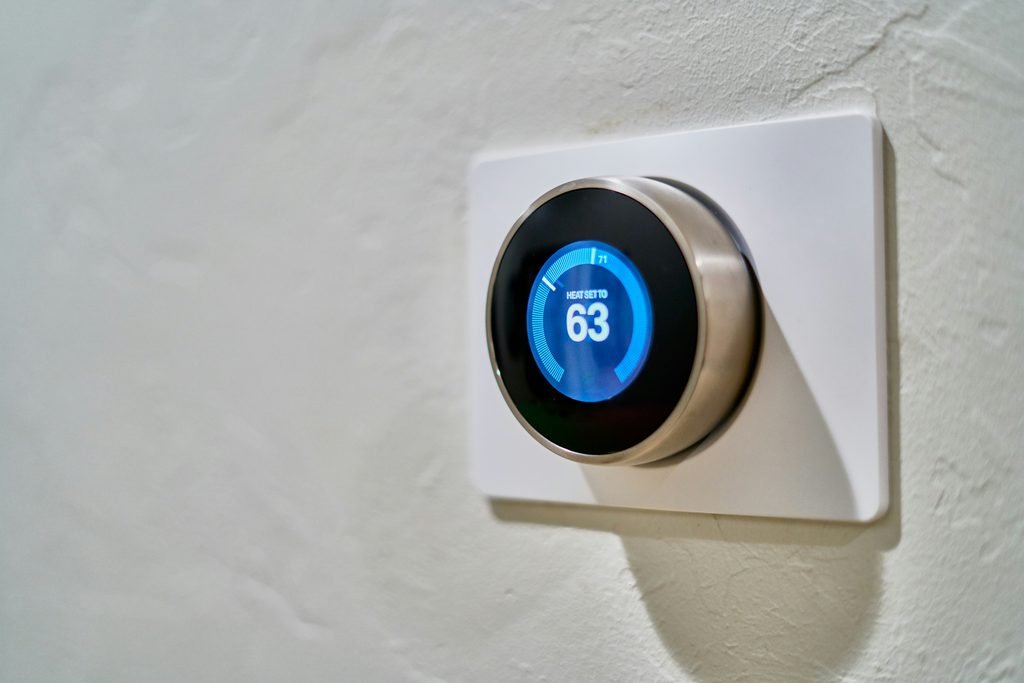
Heating and cooling account for roughly 50-52% of the average home’s energy use — by far the single biggest category, and the highest-leverage place to focus once your rate is sorted out.
Quick Thermostat Math
- Every 2°F adjustment saves roughly 3-6% on heating or cooling.
- Raising summer AC from 72°F to 78°F, or lowering winter heat to 68°F, can save $100-300 a year on its own.
Other High-Impact Fixes
- Switch to LED bulbs in your most-used fixtures — roughly $75/year in savings, and the bulbs pay for themselves within a couple of years.
- Lower your water heater to 120°F — worth another $40-80 a year, with no noticeable difference in comfort.
- Seal air leaks around windows, doors, and attic access points — a home energy audit can uncover leaks that are otherwise invisible.
- Fix dripping faucets. A single faucet leaking one drop per second wastes about 3,000 gallons of water a year — the equivalent of roughly 180 showers — while also forcing your water heater to cycle constantly.
Don’t Ignore the “Phantom Load” Problem
Electronics left plugged in — game consoles, TVs, entertainment centers — draw power even when they’re technically off.
Smart plugs that cut power to these devices when idle typically cost $15-30 each, with a single device often saving $15-25 a year and paying for itself within 6-12 months.
A set of three on an entertainment center commonly recovers its cost in under six months.
A Bigger Swing Worth Knowing About
For households already considering a water heater replacement, switching from a standard electric water heater to a heat pump water heater can save a family of four an estimated $550 a year, according to ENERGY STAR figures.
The upfront cost is higher, but state, utility, and local incentive programs frequently offset a meaningful chunk of that cost — worth checking before assuming it’s out of reach.
Get Paid to Use Less at the Right Time
Here’s a genuinely underused option: virtual power plant (VPP) programs let you enroll smart devices — batteries, EVs, smart thermostats — into grid-balancing programs.
When the grid needs it, the utility draws a small amount of stored or reduced energy from participants during peak demand, and in exchange, programs like these have paid enrolled households anywhere from $50 to $300+ a year in bill credits.
It’s essentially getting compensated for equipment and habits you may already have.
Putting It Together: A 30-Minute Starting Plan
- Check whether your state lets you choose an electricity supplier, and compare your current rate against competitive options.
- Confirm whether you’re on a Time-of-Use plan, and if so, note your cheapest hours.
- Adjust your thermostat by 2°F in the appropriate direction for the season.
- Set your water heater to 120°F if it’s currently higher.
- Add smart plugs to your biggest phantom-load devices.
- Look into a home energy audit — many utilities subsidize them heavily or offer them free.
Common Questions About This
Why is my bill so much higher than it used to be, even though I haven’t changed my habits?
Rising grid maintenance costs, a shift toward Time-of-Use pricing in many states, and more electricity-hungry devices in the average home (EVs, heat pumps) have all pushed bills up independent of your own usage habits.
Can I really choose a different electricity supplier?
In deregulated states like Texas, Ohio, Pennsylvania, and Connecticut, yes — your bill’s delivery charge stays the same, but the supply portion can often be lowered by switching providers.
Is a home energy audit worth the cost?
Many utilities subsidize audits heavily or offer them free, and studies suggest targeted improvements identified through an audit can cut annual energy consumption by 10-30%.
What’s the single highest-impact change for most households?
Addressing heating and cooling first tends to move the needle most, since it accounts for roughly half of a typical home’s energy use — followed by checking whether your rate itself is competitive.
Before You Assume a High Bill Is Just Normal Now
A high utility bill isn’t necessarily a fixed cost of modern life — it’s usually a combination of a rate you never checked and habits nobody ever pointed out cost as much as they do.
Start with the rate, since it takes zero lifestyle change to fix.
Then work through the highest-impact usage changes, in order, rather than trying to overhaul everything on the same day.