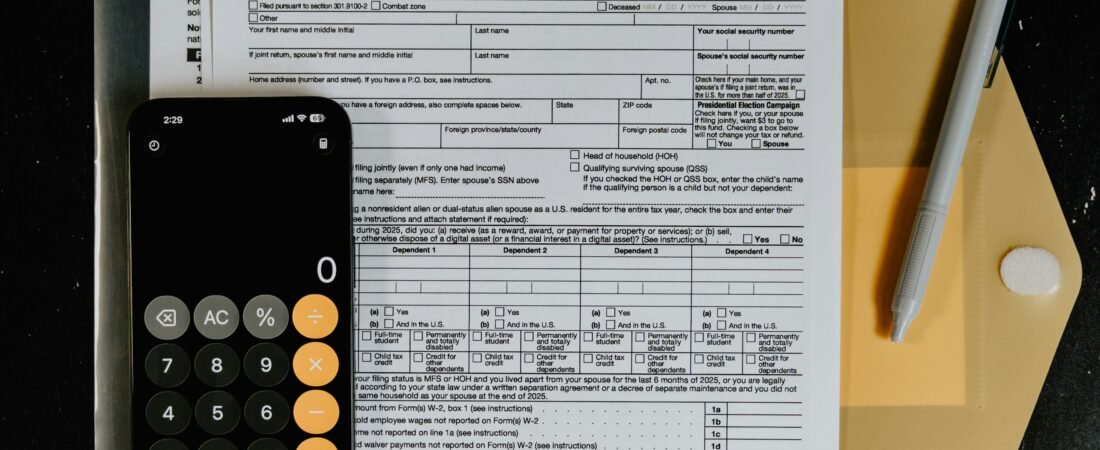
Your W4 Form 2026 is the quiet reason two coworkers can file their taxes in the same week and walk away with completely different results.
One gets a $4,200 refund and books a vacation with it.
The other opens a letter that says he owes $1,900 (money he doesn’t currently have sitting around).
Neither one did anything wrong on purpose.
They just filled out the same form differently on their first day of work, back when neither of them was paying much attention to it.
That form is the W-4, and most people never touch it again after they sign it once.
1. The Refund Isn’t a Gift
A refund feels like a bonus, but it isn’t one.
It’s your own paycheck coming back to you, months late, with zero interest attached.
If you got $4,200 back, that means your employer held back $4,200 more than you actually owed across the entire year.
1.1 What That Actually Costs You
Spread over 26 paychecks (most people are paid biweekly), that’s roughly $160 per paycheck sitting with the IRS instead of sitting in your bank account.
That’s $160 that could have gone toward any of the following:
- A credit card balance that’s charging you 20%+ interest right now
- A high-yield savings account actually earning something back
- Breathing room during a tight month, instead of relying on a credit card to cover it
1.1.1 The One Exception Worth Naming
Some people genuinely like the forced-savings effect of a big refund, and that’s a fair trade-off (if it’s the only way you’d actually save money without touching it).
The problem isn’t the refund itself.
The problem is when it isn’t a choice at all — just a form nobody ever went back to fix.
2. Owing Money Isn’t a Punishment

A tax bill feels like a failure, but it’s usually just math that didn’t line up.
Your withholding is based on estimates your employer makes, using only the information you gave them on your W-4.
2.1 Why the Numbers Get Thrown Off
If your situation changed and the form didn’t, the estimate is going to be wrong.
Here are the most common reasons that happens:
- A second job (each employer withholds as if it’s your only income)
- A spouse who started working, or switched jobs
- A new freelance gig or side hustle with no automatic withholding
- A raise, especially a large or sudden one
- A marriage, a divorce, or a new baby
Any one of these can throw off the numbers without you noticing — until tax season shows up and tells you.
2.2 The Part That Actually Stings
The IRS generally won’t penalize you for owing a modest amount, thanks to something called the safe harbor rule.
Cross a certain threshold, though, and you can get hit with an underpayment penalty on top of the bill itself (using a form called Form 2210).
That’s really the part that stings — not the owing itself, but being blindsided by it with no warning.
3. What the Form Is Actually Doing Behind the Scenes
The W-4 doesn’t set your taxes.
It only sets your withholding — meaning how much of your paycheck gets sent to the IRS in advance, on your behalf.
Your real tax bill for the year is calculated later, when you file your return, using your income, deductions, and credits together.
3.1 The Five Steps (Only Two Are Required)
- Step 1 — Your basic information (name, filing status, address). Required.
- Step 2 — Multiple jobs or a working spouse. Optional, but skipping it is the single most common reason people end up under-withheld.
- Step 3 — Dependents and the Child Tax Credit. For 2026, that credit rose to $2,200 per qualifying child (up from $2,000).
- Step 4 — Other income, itemized deductions, and extra withholding (more on this below).
- Step 5 — Your signature. Required.
3.2 The Fastest Fix Most People Never Use
Inside Step 4 sits a line called 4(c), where you can simply ask for a flat extra dollar amount to be withheld from every single paycheck.
This is, by far, the fastest fix for anyone who got an unpleasant surprise last April.
Even an extra $20–$30 per paycheck (a small enough amount most people won’t even notice in their take-home pay) is often enough to erase a bill by the time the year is over.
4. Something New for 2026
Recent tax law changes added provisions around tips and overtime pay that flow directly through this same form.
If a meaningful part of your income comes from tips or overtime, those changes can shift your withholding calculation more than they would have in past years.
That makes this a worse-than-usual year to leave an old W-4 sitting untouched, especially if:
- You work in a tipped industry (serving, bartending, delivery, etc.)
- You regularly earn overtime pay
- Your last W-4 was filled out before any of this applied to you
If any of those apply, it’s worth a second look now — rather than finding out in April.
5. A Faster Way to Get the Number Right

Guessing at Step 4(c) works, but there’s a free tool that removes the guessing entirely: the IRS Tax Withholding Estimator.
5.1 What It Needs From You
It takes the following inputs:
- Your income
- Your filing status
- Your dependents
- What’s already been withheld so far this year
…and tells you the exact dollar figure to write on a new W-4.
It takes about ten minutes (less, if you have a recent pay stub sitting next to you).
5.2 How Often You Can Actually Use It
You can submit a new W-4 to your employer at any point in the year — not just during open enrollment, and not just when you start a new job.
There’s no waiting period, and no limit on how many times you’re allowed to update it.
After you submit one, check your very next pay stub to confirm the federal withholding line actually changed.
6. When It’s Actually Worth Redoing
A few specific moments are worth stopping and updating the form, rather than waiting for next year to sort itself out on its own:
- Starting a new job, or picking up a second one
- Getting married, getting divorced, or having a child
- Picking up freelance work, delivery driving, or any income where nobody withholds taxes for you automatically
- Being surprised by more than a few hundred dollars (in either direction) last April
If even one of these applies to you right now, that’s reason enough on its own to open the form again.
7. The Actual Goal
The goal isn’t a big refund, and it isn’t zero owed either.
The goal is a number small enough, in either direction, that it barely registers when you see it.
People who feel calm at tax time aren’t the ones who got the biggest check back.
They’re the ones who already knew, more or less, what was coming — because they’d looked at this form more recently than the day they were hired.
The W-4 is one of the only tax forms you have full control over, the moment you decide to actually look at it again.