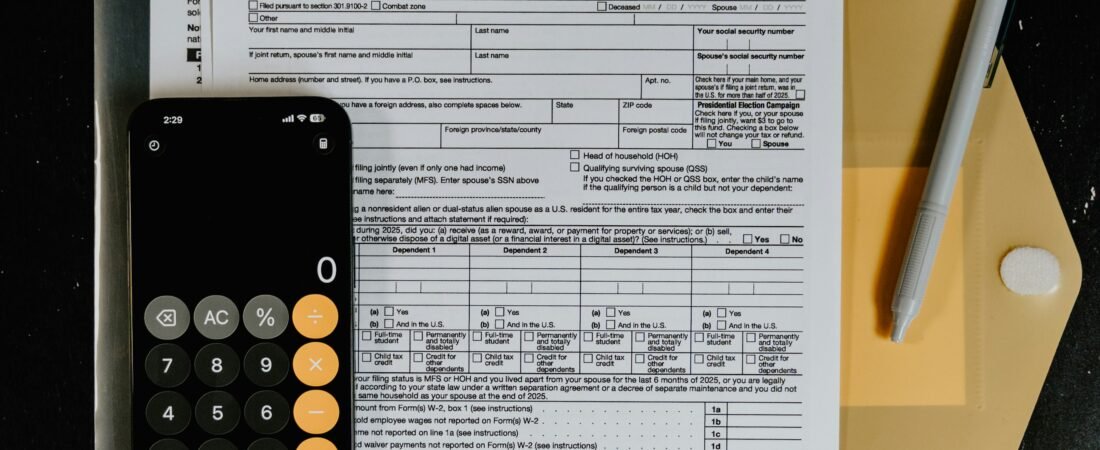
The qualified overtime deduction doesn’t make overtime pay tax-free. It’s a deduction for one specific slice of overtime pay, and the IRS’s August 2026 fact sheet spells out which slice. Here’s what it says, with my own comments labeled.
The Actual Slice That Qualifies
According to the IRS Fact Sheet FS-2026-13 (August 2026, which supersedes FS-2026-01), qualified overtime is “the amount of overtime compensation required under 29 USC § 207 that is in excess of the employee’s regular rate.” For most employees the formula, per workweek, is hours over 40 × ½ × the FLSA regular rate. That means only the half-time premium counts, not the full overtime pay.
As an assumed example, at a $20 regular rate, time-and-a-half is $30 an hour, and the qualified part is the $10 premium. If all of someone’s overtime is paid at exactly time-and-a-half under the FLSA, dividing the overtime pay by three gives the premium. For instance, $19,500 of such overtime pay contains $6,500 of qualified premium ($19,500 ÷ 3). That shortcut only works when the pay is exactly time-and-a-half; the IRS formula above is the rule.
Qualified Overtime Deduction: Paying More Than the Law Requires
FAQ 16 of the fact sheet says only the amount minimally required by FLSA section 7 counts. If an employer pays more, for example double time, the excess does not count. Premiums for hours beyond 8 in a day, weekends or holidays are evaluated under the FLSA’s rules, and only the amount the FLSA requires counts.
| IRS example (FAQ 16) | Amount |
|---|---|
| Regular rate / overtime hours | $20 / 10 hours |
| Paid at double time | $400 |
| Qualified (FLSA-required premium: 10 × $20 × ½) | $100 |
| Not qualified (extra premium paid voluntarily) | $200 |
In the IRS example, an employee works 50 hours at a $20 regular rate and is paid double time for 10 overtime hours, $400 in total. Only the $100 required premium counts as qualified overtime, not the extra $200. In my view, that means two workers with the same overtime paycheck can have different deductions, depending on what the law required for their hours.
Limits and Who Qualifies
- Cap: up to $12,500 per return, or $25,000 on a joint return. The deduction is reduced when MAGI exceeds $150,000 ($300,000 for joint filers) (FAQ 2).
- Deduction, not exclusion: it’s available whether you take the standard deduction or itemize, and it doesn’t exclude overtime from gross income or from employment taxes. Overtime remains subject to income tax withholding, Social Security and federal unemployment tax (FAQ 1).
- Eligibility: only FLSA overtime-eligible employees (covered and not exempt) can have qualified overtime. Overtime required by a collective bargaining agreement or other law doesn’t qualify for someone who is FLSA-ineligible (FAQ 4).
- Married filers: must file jointly to claim it, and the SSN requirements apply (FAQs 24 and 25).
- Tax years: the IRS announcement says 2025 through 2028.
Reporting and Claiming
Form W-2, Box 12, Code TT
Starting in 2026, employers and payors must separately report qualified overtime, usually in W-2 Box 12, Code TT (FAQ 6). The full qualified overtime paid is reported even if the deduction is limited (FAQ 10), and the employee reports the full Box 12 TT amount in Part III of Schedule 1-A, which then applies the limits (FAQ 19).
If the W-2 Is Wrong
The fact sheet says only amounts shown on a properly furnished W-2 Box 12 TT can be deducted for tax years after 2025 (FAQ 20). If the W-2 overstates the amount, the employee may use only the amount actually paid (FAQ 21). If it omits or understates it, the employee must obtain a Form W-2c, and if the employer won’t issue one the omitted amount cannot be deducted (FAQ 22). Form 4852 is not a valid substitute (FAQ 23). In my view, keeping your own record of hours and rates is a sensible way to notice a discrepancy early.
Adjusting Withholding
FAQ 8 says employers don’t reduce withholding for the deduction unless you give them an updated, valid Form W-4 reflecting the expected deduction. FAQ 9 says the 2026 W-4 has a Step 4(b) worksheet for this and that the IRS Tax Withholding Estimator accounts for it. My suggestion is to estimate conservatively, using only the FLSA premium, so withholding isn’t understated.
1099 Forms
Under FAQs 6 and 7, qualified overtime is reported on Form 1099-MISC (Box 14) or 1099-NEC (Box 1d) only when the worker is an FLSA employee but an independent contractor for tax purposes. The IRS notes such cases are rare.
Comp Time
For state and local comp time under FLSA section 7(o), FAQ 18 says qualified overtime isn’t paid when the comp time is earned, but when it’s used (paid as wages) or cashed out. For federal employees, FAQ 27 says comp time earned or used during employment is not qualified overtime, and when unused comp time is paid at separation, one half of the hourly regular rate times the overtime hours covered is qualified overtime.
Qualified Overtime Premium Deduction: Questions Answered
Does this apply to salaried exempt employees? No. The fact sheet says FLSA-exempt employees are not eligible. Exemptions include executive, administrative and professional staff, outside sales, and certain others (FAQ 4).
Does it apply to state income tax? The fact sheet addresses the federal deduction.
Is it permanent? The IRS announcement says it covers tax years 2025 through 2028.
Where do I claim it? On Schedule 1-A, per the fact sheet.
Where This Leaves You
In my view, the deduction is worth claiming accurately, and the number to use is the FLSA-required premium that appears in Box 12 Code TT of your W-2, not your total overtime pay.
Related reading: No Tax on Tips: Why Crypto Tips Don’t Qualify and How to Keep Your Deduction and Take-Home Pay After a Raise: The Exact Math.
This article offers general information and my own opinions, not financial, tax, or legal advice. The figures in worked examples are assumed unless attributed to the IRS. Laws, tax rules, and products change and can differ by location, so check current official sources and talk to a qualified professional about your own situation.
Sources: