
You can leave crypto to your kids, and in many ways the tax rules actually favor it.
But it requires a different kind of planning than a house or a brokerage account. Skip that extra step, and the plan to leave crypto to your kids can quietly fail — the coins still exist, but nobody can reach them.
Here’s what estate planning actually says about doing this right.
The Core Problem: No “Forgot Password” Button
With a bank account, an executor shows up with a death certificate and gets access. The bank has a customer service department built for exactly this situation.
Crypto doesn’t work that way. If your assets sit in a self-custodied wallet, you are the only “customer service department” that exists.
The scale of this problem is larger than most people assume. Analytics firm Chainalysis estimates that around $140 billion in Bitcoin — roughly one-fifth of the entire supply — may already be permanently lost, and poor estate planning is a meaningful part of that number.
“Not your keys, not your coins” is the phrase crypto communities use to describe self-custody. The estate planning version of that same idea is just as blunt: no private key, no inheritance, no matter what a will says.
It helps to be specific about why this differs so completely from every other asset in an estate. A house has a deed recorded with a government office.
A brokerage account has a company with a legal obligation to verify identity and transfer ownership. A crypto wallet has neither — it exists purely as cryptographic data, verified only by whoever holds the matching key, with no institution standing behind it to step in when that key goes missing.
A Real Case That Shows What Goes Wrong
Matthew Mellon, a banking heir and early Ripple investor, died unexpectedly in 2018 at age 54, reportedly holding around $500 million in XRP.
He had taken security seriously — cold storage wallets distributed across multiple countries specifically to reduce theft risk. That same precaution became the exact obstacle his family faced afterward.
Some funds were eventually recovered. Substantial amounts reportedly were not, due to lost private keys and incomplete documentation of where everything was actually held.
The lesson isn’t “don’t use cold storage.” It’s that security and inheritance access are two different problems, and solving one doesn’t automatically solve the other.
What Not to Do: Put the Private Key in Your Will
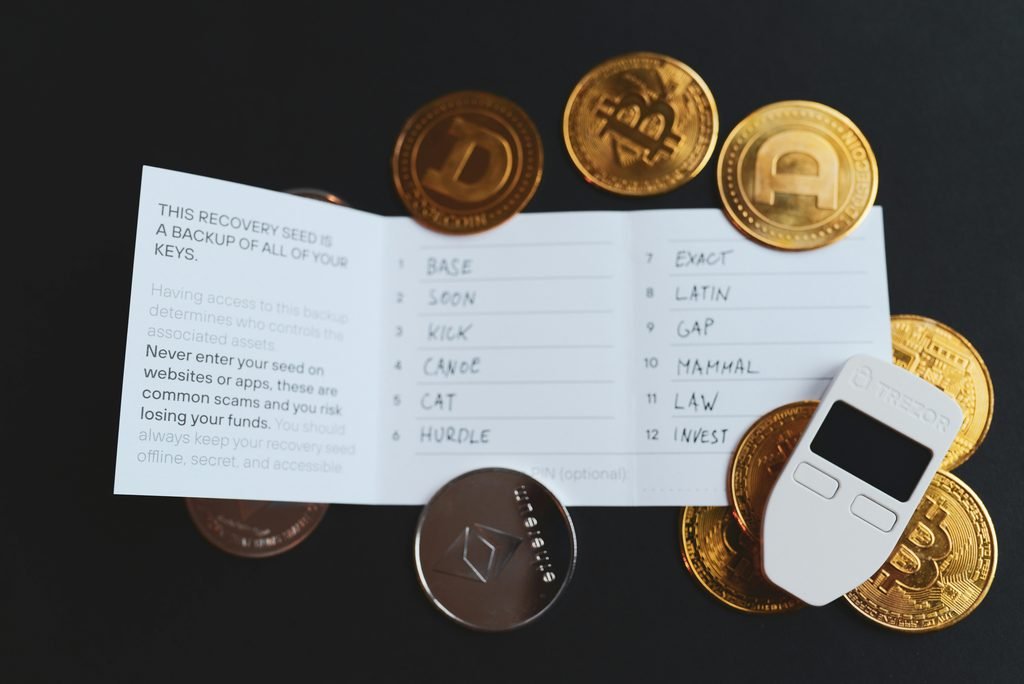
This is worth stating plainly, because the instinct to write everything down clearly in one place is understandable and wrong.
A will becomes a public document during probate. Anything written directly into it — including a private key or seed phrase — becomes something a court clerk, a probate record search, or in rare cases a bad actor could potentially access.
The safer approach is a separate letter of instruction, stored securely and outside the will itself, that tells your executor and heirs where assets are held and how to access them, without that information ever becoming part of the public record.
What to Do Instead
A few tools solve the actual problem — giving heirs real access without exposing that access to everyone.
Multi-signature wallets or collaborative custody. These require multiple parties (you and a trusted family member, or a specialized custody service) to jointly authorize a transaction, which prevents any single point of failure or single point of premature access.
A secured digital asset inventory. A general inventory — which exchanges or wallets hold what, roughly how much, without embedding the actual keys — helps your executor know where to look, stored somewhere secure but separate from the will itself.
A “dead man’s switch” service. Some services release access information to a designated person only if you stop checking in after a set period, adding a layer of protection against premature access while you’re still alive.
None of these tools need to be used in isolation. A common combination is a multi-signature setup for the largest holdings, paired with a simple, updated inventory document that tells the family which service or wallet each smaller holding sits in — layering redundancy so that no single missing piece, whether a lost device or a forgotten password, takes down the entire plan.
Private Key Storage Methods, Explained in Detail
This is the part most articles skip past quickly, and it’s the part that actually matters. Here’s each real method, what it protects against, and where it falls short.
Hardware wallets (cold storage). A small physical device (Ledger, Trezor, and similar) that generates and stores your private keys offline, signing transactions internally without ever exposing the key to an internet-connected computer.
This is the foundation layer almost every serious storage strategy starts with — it protects against remote hacking, but not against the device itself being lost, stolen, or destroyed, which is exactly why the seed phrase backing it up matters just as much as the device.
Paper backup. Writing the 12 or 24-word seed phrase on paper is the simplest method and the easiest to get wrong. Paper burns, water-damages, and fades — a real risk for something meant to last decades. It’s an acceptable starting point for a small holding, but not something to rely on alone for anything substantial.
Metal backup plates. The seed phrase gets stamped or slotted into a steel or titanium plate instead of written in ink. Independent testing rates the leading products — Billfodl, Cryptosteel, and Cryptotag Zeus (titanium, the premium tier) — as able to survive temperatures around 1,400°C, along with water and corrosion.
For anyone holding more than a token amount, this is widely considered worth the cost over paper alone.
Geographic distribution of complete copies. Storing two or three full, complete copies of the same seed phrase in genuinely separate locations — a home safe, a bank safety deposit box, a trusted family member’s house in a different city — protects against a single local disaster (fire, flood, theft) wiping out your only backup.
Shamir’s Secret Sharing (SLIP-39). This is a meaningfully different concept from splitting a phrase in half, and the distinction matters enormously.
SLIP-39 cryptographically splits one seed into a set number of shares with a recovery threshold — a common setup is 5 shares with a threshold of 3, where any 3 shares reconstruct the full wallet, and losing or even having 2 shares stolen doesn’t compromise anything. Critically, a single share on its own reveals zero information about the underlying seed phrase to anyone who finds it.
Trezor has supported this natively since 2017 and made it the default backup option in 2024.
What not to do: manually splitting a phrase in half. This sounds like the same idea as Shamir sharing, but it isn’t, and it’s actually worse than a single complete backup.
If you write half your seed phrase on one paper and half on another, losing either half makes the whole thing unrecoverable — you’ve multiplied your points of failure rather than reduced them.
Worse, a partial phrase isn’t worthless to an attacker; knowing some of the words meaningfully narrows the effort needed to guess the rest. If redundancy is the goal, complete separate copies or genuine Shamir shares are the correct tools — not a phrase cut down the middle.
Institutional custody services. For very large holdings, some people opt for a regulated third-party custodian instead of self-custody entirely, trading some of crypto’s core “you control your own keys” principle for an institution with its own recovery processes, similar to a traditional financial account.
A Real Example of What Can Go Wrong Even With Good Intentions
Stefan Thomas, Ripple’s former CTO, received 7,002 Bitcoin in 2011 as payment for an explainer video and stored the private keys on an IronKey USB drive — a device that permanently wipes itself after ten incorrect password attempts.
He has used eight of those ten attempts. The Bitcoin, worth well over $700 million at various points since, remains inaccessible.
This isn’t a story about carelessness. It’s a story about a security measure (self-destructing after failed attempts) doing exactly what it was designed to do, in a way that became a liability the moment the password itself was lost.
It’s a useful reminder that “more secure” and “more recoverable” aren’t always the same goal, and a full storage strategy needs to account for both.
A 2026 survey of 1,000 U.S. crypto holders found that 35% had lost access to a wallet at some point — and almost always, the cause was a missing or damaged backup, not a hack. That statistic alone is the strongest case for taking backup strategy as seriously as security itself.
The Legal Mechanism Most People Have Never Heard Of
Even with the technical access sorted out, there’s a legal gap that catches people off guard: most U.S. states have adopted a law called RUFADAA (the Revised Uniform Fiduciary Access to Digital Assets Act) by 2026.
RUFADAA gives an executor or trustee legal authority to manage digital assets — but only if your will or trust explicitly grants that authority.
Without that specific language, your family could have your passwords and still be legally blocked from using them, since accessing certain accounts without documented permission can be treated as unauthorized access under a platform’s own terms of service.
This is the detail a generic, pre-crypto will or template almost never includes, since most were drafted before this was a consideration at all.
The Tax Rules Actually Work in Your Favor
Here’s the part of this that’s genuinely good news, and it’s worth knowing clearly.
When crypto passes to an heir after your death, it typically receives a “stepped-up basis” — the cost basis resets to the asset’s value on the date of death, rather than what you originally paid for it.
A concrete example: if you bought Bitcoin at $500 and it’s worth $80,000 the day you pass it on, your heir’s cost basis becomes $80,000, not $500. If they sell immediately at that price, the capital gain is close to zero — all of that original appreciation is never taxed at all.
Compare that to the alternative: if you sold that same Bitcoin yourself before passing away, you’d owe long-term capital gains tax at 15% or 20% federally, potentially plus a 3.8% Net Investment Income Tax, on the full gain between $500 and whatever it sold for.
For 2026, that 20% top rate kicks in above roughly $613,700 of taxable income for a married couple filing jointly. Holding the asset until death, rather than selling it during your lifetime, is what unlocks the step-up — a detail that makes the timing of any lifetime sale worth thinking through carefully.
On top of that, the 2026 federal estate tax exemption sits at $15 million per person, which means the vast majority of families won’t owe any federal estate tax on a crypto inheritance regardless of how much it’s grown in value.
Two Security Risks in the Planning Itself
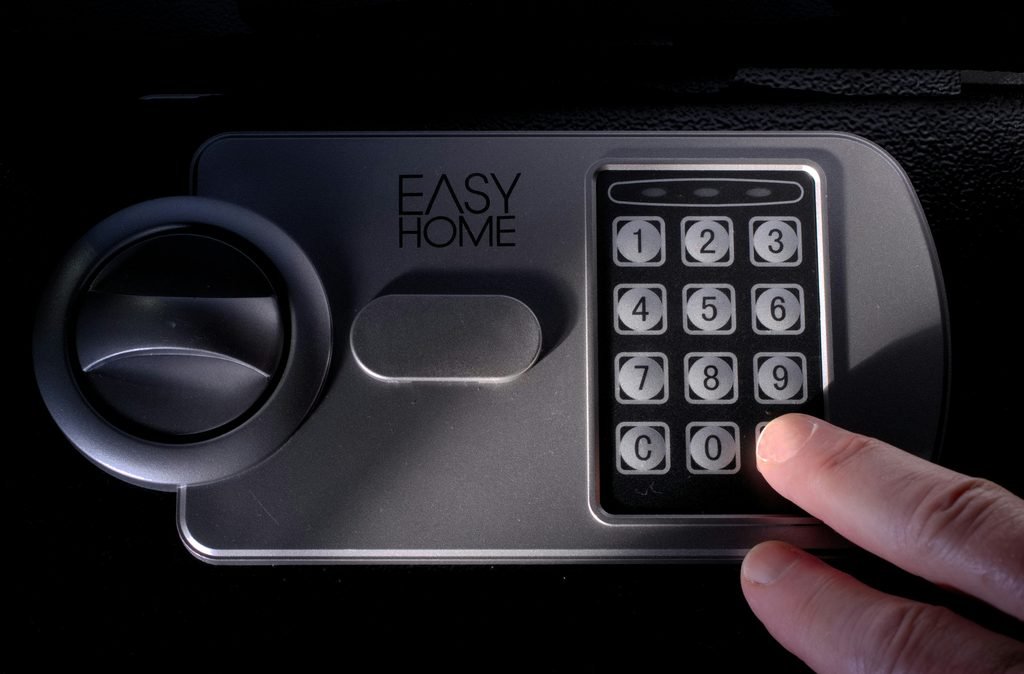
Setting up the plan can accidentally create new risks if a couple of details get missed.
Storing seed phrases or private keys in ordinary cloud storage (a notes app, a cloud drive folder) is a common mistake — these services are known targets for hackers specifically scanning for files labeled with words like “wallet,” “seed,” or “crypto.”
A will that explicitly names a large crypto holding also becomes a target in a different way: if it’s discoverable in probate records, grieving heirs can become targets for scammers posing as legal or technical help, aware exactly what to ask for and when.
A Practical Checklist
If the goal is to leave crypto to your kids without any of the failure points covered above, these five steps cover the actual gap:
- Mention crypto holdings in your will or trust in general terms. Confirm their existence without listing private keys or exact account details directly in the document.
- Explicitly grant digital asset authority under RUFADAA. Generic estate planning language written before this law existed usually doesn’t cover this — ask your attorney to add it specifically.
- Create a separate, secured letter of instruction. Keep it apart from the will, and update it whenever your holdings or storage methods change.
- Consider multi-signature or collaborative custody for larger holdings. It removes the single point of failure that cost the Mellon estate part of its access.
- Talk to an estate planning attorney familiar with digital assets. This is a rapidly evolving area, and a template written for traditional assets alone will likely miss the specific mechanisms crypto requires.
Questions Worth Answering
Do all states currently recognize RUFADAA? Most states have adopted it in some form by 2026, but the specific language and requirements vary, which is exactly why explicit wording in your own documents matters rather than assuming default state law covers you.
Is a living trust better than a will for crypto specifically? A living trust can offer more privacy than a will, since it generally doesn’t go through public probate — a meaningful advantage given the concern about a will’s contents becoming discoverable.
What happens to crypto held on an exchange versus a self-custodied wallet? An exchange account is closer to a traditional financial account and generally follows a more familiar access process with proper documentation.
A self-custodied wallet has no equivalent fallback, which is why the planning steps above matter most for that category specifically.
Is this level of planning really necessary, or is it overkill for a modest holding?
The same principles apply at any size, but the more a holding is worth, the more the cost of skipping this planning grows — the Mellon case involved hundreds of millions, but the identical “no forgot password” problem applies just as completely to anyone who wants to leave crypto to your kids from a much smaller wallet.
The One-Line Version
Roughly 70 million Americans now hold crypto, and the number of people who’ve actually lost an inheritance to a missing key is a small fraction of that — which means the risk here isn’t crypto itself, it’s skipping a few specific, well-documented planning steps that traditional estate planning was never built to cover on its own.
Handled properly — general disclosure in the will, explicit RUFADAA language, a secured letter of instruction, and a sensible custody setup — passing crypto down to the next generation is no riskier than passing down anything else you own. The risk was never the asset. It was always the paperwork nobody thought to update.