
Is the extra fee worth it? For most people who just want long-term Bitcoin or Ethereum exposure, no — a regular Roth IRA holding a spot crypto ETF does the same job for a fraction of the cost.
The extra fee only earns its keep in three specific situations. If none of those apply to you, you’re very likely paying more for the same outcome.
Here’s exactly what those three situations are, and the real numbers behind each one.
The Default Winner Most People Overlook
Before comparing crypto IRA providers, it’s worth knowing the cheapest path even exists: a regular Roth IRA at Fidelity, Schwab, or Vanguard can hold a spot Bitcoin ETF like IBIT or FBTC, both charging around 0.20–0.25% annually — no special account, no crypto-specific custodian, no extra paperwork.
Fidelity has gone a step further, letting customers hold both a spot crypto ETF and actual crypto in the same IRA, which covers a surprisingly large share of what people assume they need a dedicated crypto IRA for.
If your entire plan is “buy Bitcoin, hold it for 20 years,” this is close to the objectively cheapest way to do that inside a retirement account. Everything below this section is about the specific cases where that default stops being enough.
Case One: You Want Altcoins an ETF Doesn’t Track
Spot crypto ETFs overwhelmingly track Bitcoin and Ethereum. If your interest extends to Solana, Chainlink, or a longer list of smaller tokens, an ETF simply doesn’t offer that exposure inside a regular IRA — this is where a dedicated crypto IRA earns its fee.
Alto CryptoIRA is the clearest example built around this need specifically: access to 250+ cryptocurrencies through a Coinbase integration, a 1% trade fee, no annual account fee, and a notably low $10 minimum to open. iTrustCapital covers similar ground with 90+ tokens plus physical gold and silver in the same account, also at a 1% trade fee with no monthly cost, though its minimum sits higher at $1,000.
The math here is straightforward: if what you actually want isn’t available through an ETF, the comparison isn’t “extra fee vs. no fee” — it’s “extra fee vs. not being able to hold this asset in a tax-advantaged account at all.” At that point, a 1% trade fee with no ongoing annual cost is a genuinely reasonable price for access an ETF simply can’t provide.
It’s worth being specific about how large this gap actually is. As of 2026, the entire spot ETF market covers a small handful of assets — Bitcoin and Ethereum, with a Solana ETF only recently launching. Everything else in the crypto market, meaning literally thousands of tokens, remains completely unreachable through the ETF route inside any retirement account.
For an investor whose interest genuinely extends past the two or three largest coins, this isn’t a marginal difference in convenience — it’s the entire reason a dedicated crypto IRA exists as a product category at all.
Case Two: You Want to Hold Your Own Keys
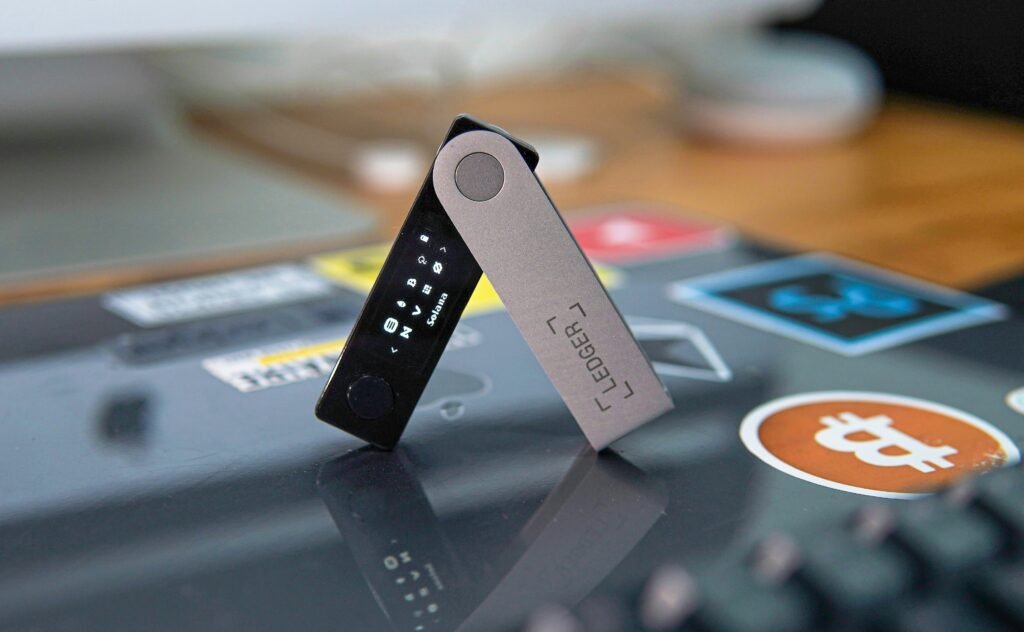
Every ETF and most crypto IRA providers are fully custodial — the provider holds the actual bitcoin, and you hold a claim on it, similar to how a regular brokerage account works. For some investors, particularly ones who take “not your keys, not your coins” seriously even inside a retirement account, that’s a meaningful gap.
Unchained is built specifically to close it. Its IRA uses a 2-of-3 multisig structure: you hold two of the three keys, Unchained holds one, and no single party — including Unchained itself — can move the funds alone. This is a Bitcoin-only product, with a $250 flat annual fee and a 1% standard trading fee (0.75% on its higher “Signature” tier), plus a $2,000 minimum purchase.
That flat $250 annual fee is worth pausing on, because it behaves differently than a percentage-based fee. On a $10,000 account, $250 is 2.5% — expensive. On a $100,000 account, that same $250 is just 0.25% — suddenly comparable to a low-cost ETF’s own expense ratio, while adding genuine self-custody. This is the clearest case where “is the extra fee worth it” depends heavily on account size, not just on which provider you pick.
There’s a practical recovery benefit worth naming too, beyond the philosophical appeal of self-custody. If one of your two personal keys is ever lost or damaged, the account remains fully recoverable — the 2-of-3 threshold is still met using your remaining key plus Unchained’s key. That’s a meaningfully different risk profile than a single hardware wallet holding one seed phrase with no built-in redundancy at all.
Case Three: You’re Investing Small, Recurring Amounts
Several crypto IRA providers set minimums that quietly rule out smaller or newer investors before the fee question even comes up. iTrustCapital’s $1,000 minimum and Unchained’s $2,000 minimum purchase are real barriers for someone wanting to start with less, or to dollar-cost-average smaller contributions over time.
Alto’s $10 minimum solves this directly, making it realistically possible to route a modest, recurring contribution (say, $50 a week) into a diversified crypto position inside a Roth IRA — something that’s simply not practical for the same amount at a $1,000-minimum competitor.
If your actual pattern looks like small, frequent contributions rather than a single lump sum, the provider that lets you start small usually matters more than shaving a fraction of a percent off the trading fee itself.
This case matters more for younger or newer investors than the fee comparison alone might suggest. Someone contributing $50 a week simply can’t access a $1,000-minimum platform until they’ve already saved up several weeks’ worth of contributions elsewhere — meaning the effective cost of a high minimum isn’t just inconvenience, it’s weeks of contributions sitting uninvested and not growing at all while the balance builds toward the threshold.
The Fee Comparison Table
| Provider | Trade Fee | Annual Fee | Minimum | Best For |
|---|---|---|---|---|
| Regular Roth IRA + ETF (Fidelity, Schwab) | 0% | ~0.20–0.25% | Varies | Simple BTC/ETH long-term holding |
| iTrustCapital | 1% | $0 | $1,000 | Broad altcoin + metals access |
| Alto CryptoIRA | 1% | $0 | $10 | Small/recurring contributions, 250+ tokens |
| Unchained | 0.75–1% | $250 flat | $2,000 | Self-custody via multisig |
| BitcoinIRA | Up to 5.99% | Up to 2% of assets | Varies | Generally the most expensive mainstream option |
What a 2% Annual Fee Actually Costs Over Time

This is worth seeing in concrete terms rather than as an abstract percentage. On a $10,000 account with no further contributions, a 2% annual fee compounds to consume roughly 30% of total gains over 20 years — not 2% total, 2% every single year, stacking on top of itself the entire time.
That’s the specific trap with providers like BitcoinIRA, which layer a percentage-based custody fee (up to 2% annually) on top of a per-trade fee that can itself run as high as 5.99%. Compared side by side against iTrustCapital’s flat 1% trade fee with zero ongoing cost, there’s rarely a scenario where the higher-fee option makes mathematical sense for a straightforward buy-and-hold investor.
The mechanism worth understanding is compounding working in reverse. A percentage-based annual fee doesn’t just take a cut once — it takes that same percentage out of a growing balance every single year, meaning the dollar amount lost grows right alongside your gains.
A one-time or per-trade fee, by contrast, is paid once and then done; it doesn’t keep compounding against you for as long as the account stays open. That structural difference, more than the headline percentage itself, is why an annual custody fee does so much more damage over a multi-decade holding period than an equivalent-looking one-time cost.
So, Is the Extra Fee Worth It?
Based on everything above, yes — but only when it’s buying you something an ETF genuinely can’t: broader token access, real self-custody, or a low enough minimum to actually match how you invest.
If none of those three apply — if you just want Bitcoin or Ethereum exposure, held simply, for decades — the extra fee isn’t worth it, and a spot ETF inside a completely ordinary Roth IRA remains the cheapest, simplest way to get the exact same tax treatment.
A Practical Way to Decide
- Want simple, long-term BTC or ETH exposure? Skip the crypto IRA entirely and buy a spot ETF inside a regular Roth IRA at Fidelity, Schwab, or Vanguard.
- Want altcoins beyond BTC/ETH? iTrustCapital or Alto are the realistic options, with Alto’s lower minimum favoring smaller accounts.
- Want to actually hold your own keys? Unchained is the only mainstream provider built specifically around that, and its flat fee becomes proportionally cheaper as your balance grows.
- Investing small or recurring amounts? Alto’s $10 minimum is built for exactly this pattern; a $1,000+ minimum elsewhere isn’t.
- Comparing any provider’s headline fee? Model the total cost — trade fee plus annual fee plus minimum — against your actual expected balance and trading frequency, rather than comparing a single number in isolation.
Questions Worth Answering
Can I hold both a crypto IRA and a regular Roth IRA with ETFs at the same time? Yes — nothing prevents holding both, as long as total contributions across all your IRAs stay within the annual limit ($7,000 for 2026, $8,000 if 50 or older).
Do these providers all support Roth IRAs specifically, not just Traditional? Yes, iTrustCapital, Alto, and Unchained all support Roth structures, meaning qualified withdrawals in retirement remain completely tax-free regardless of which provider or asset selection you choose.
Is a flat annual fee always better than a percentage-based one? Not always — a flat fee like Unchained’s $250 becomes cheaper relative to a growing balance, but it’s proportionally more expensive on a small one. Run the actual numbers against your starting balance rather than assuming either structure automatically wins.
Can I switch providers later if my needs change? Generally yes, through a direct custodian-to-custodian transfer, though the process and any fees involved vary by provider — worth confirming before opening an account if flexibility to switch later matters to you.
Does the extra fee ever pay for better security specifically? Only with a genuine self-custody structure like Unchained’s multisig model — is the extra fee worth it for security alone? Not with a purely custodial provider charging a higher fee, since that isn’t necessarily providing better security than a low-cost ETF held at a major brokerage — both ultimately rely on institutional custody either way.
The One-Line Version
Is the extra fee worth it? The extra fee behind a dedicated crypto IRA is worth paying exactly three times — for altcoins an ETF won’t touch, for real self-custody, or for a minimum low enough to match how you actually invest — and worth skipping in every other case, where a plain Roth IRA holding a spot ETF quietly does the same job for less.