Index funds explained without the jargon comes down to one plain-English sentence: it’s a way to buy a tiny slice of hundreds or thousands of companies at once, with one purchase, instead of trying to guess which single company will do well.
Everything else — expense ratios, passive management, dollar-cost averaging — is just detail on top of that one idea.
Here’s the number that actually matters: fewer than 5% of active large-blend stock funds managed to beat their passive index counterparts over a 15-year stretch, according to Morningstar’s long-running research.
The professionals paid to beat the market usually don’t. That’s not a reason to feel behind — it’s the reason index funds exist in the first place.
The Jargon, Translated
Most guides explain index funds using the same words that confused you to begin with. Here’s what each term actually means, in one sentence.
- “Index” — A list of companies grouped together to represent a slice of the market. The S&P 500 is 500 large U.S. companies, for example.
- “Index Fund” — A single investment that buys a little bit of every company on that list, so your one purchase instantly owns a piece of all of them.
- “Passive Management” — Nobody is picking winners and losers. The fund just holds whatever’s on the list, which is exactly why it’s cheaper to run than a fund with a team of analysts trying to guess.
- “Expense Ratio” — The annual fee, shown as a percentage, that gets quietly taken out of your investment each year. Lower is better, and the difference matters more than it sounds like it should.
- “Diversification” — Spreading your money across many companies instead of one, so a single bad quarter from one company barely dents your total.
- “Dollar-Cost Averaging (DCA)” — Investing the same amount on a set schedule, like the 1st of every month, no matter what the market is doing that day, instead of trying to guess the “right” moment.
Why the Fee Percentage Actually Matters So Much
A 1% expense ratio sounds small. It isn’t, once you see it over decades.
- A low-cost index fund might charge around 0.03% a year — some, like Fidelity’s ZERO funds, charge literally 0.00%.
- An actively managed fund often charges closer to 1% a year.
- On $10,000 invested at 7% annual returns for 30 years: at a 0.03% expense ratio, that grows to roughly $76,123. At a 1.00% expense ratio, it only reaches about $57,435.
That’s an $18,688 difference — money that goes to the fund manager instead of your own account, even assuming identical returns before fees.
In practice, most actively managed funds also underperform before fees are even subtracted, which makes the real-world gap even worse.
That’s the entire case for index funds in one number. Not smarter investing. Cheaper investing, compounded over enough years to matter.
Which Fund to Actually Buy
For most beginners, the choice really is this simple. Pick one of three starting points:
- A broad U.S. total market fund (VTI, or FZROX at 0.00%)
- An S&P 500 fund (VOO, IVV, FXAIX, or SWPPX — all around 0.03%)
- A global fund covering U.S. and international stocks together (VT is the most widely used option here)
Don’t overthink small differences between similar funds. VOO, IVV, and SPY all track the same S&P 500 index with nearly identical costs — the choice between them barely matters.
What matters is staying under roughly 0.10% in expense ratio for broad market exposure, and avoiding anything above 0.5% entirely.
How to Actually Buy One
- Choose your account type first. If your employer offers a 401(k) match, grab that match before anything else — it’s free money. After that, a Roth IRA is the recommended starting point for most beginners in 2026, letting you contribute up to $7,500 for the year while your money grows completely tax-free. A taxable brokerage account has no contribution limit once your tax-advantaged accounts are maxed out.
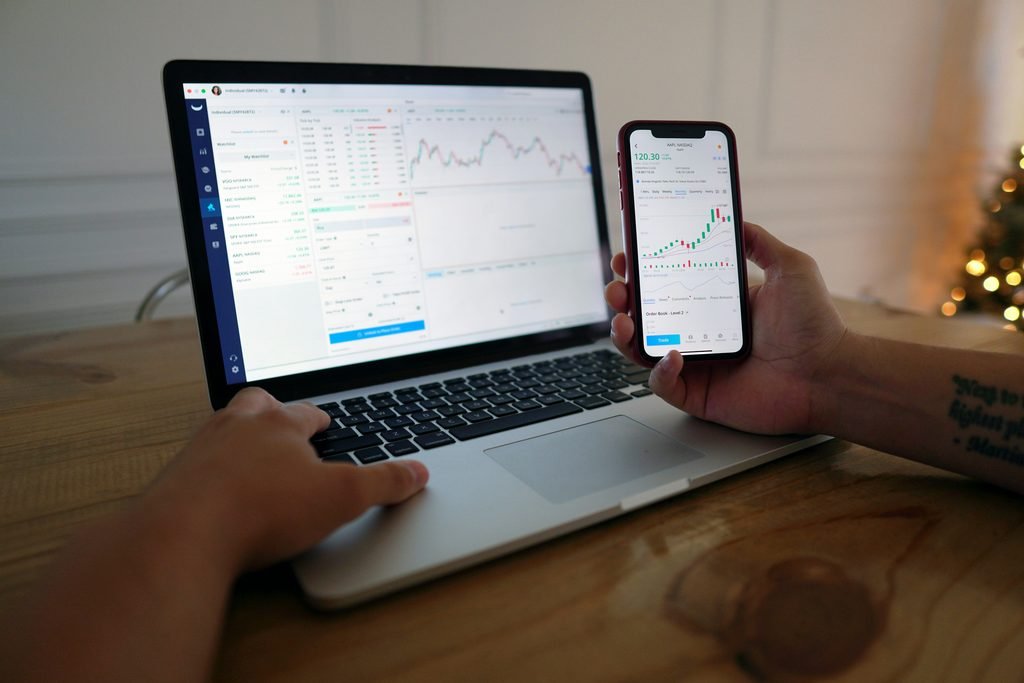
- Pick a platform. Fidelity, Vanguard, and Charles Schwab all offer commission-free purchases, fractional shares, and no account minimums.
- Link your bank account and transfer your starting amount — even $50-100 is genuinely enough to begin.
- Type in a ticker symbol from the list above into your brokerage’s search bar.
- Enter a dollar amount, not a share count. Most platforms let you buy a specific dollar amount directly, even if that doesn’t divide evenly into whole shares.
- Select “Market Order” to buy at the current price, and confirm.
You are now, at that moment, an investor.
The application itself is almost anticlimactic — everything that comes before clicking “buy” is the part that actually feels hard, which is exactly why a guide like this exists in the first place.
The One Habit That Matters More Than Your First Purchase
Automate a recurring monthly investment the same day your paycheck lands.
Even $50-100 a month, moved automatically, builds the habit without requiring a fresh decision every time.
No financial advisor, no complicated research, and no waiting around for the market to feel “right” — because it never announces the right day, and waiting for it usually just means never starting at all.
What Trips Beginners Up
- Waiting for the “perfect” moment. The market never announces a good entry point in advance, and delaying almost always just means delaying indefinitely.
- Chasing trends instead of staying boring. Index fund investing is deliberately unglamorous. The boring, consistent version tends to outperform the exciting, reactive version over time.
- Not knowing ETFs and index mutual funds aren’t identical. ETFs generally avoid a tax quirk called “capital gains distribution,” where a mutual fund can hand you a tax bill even in a year you didn’t sell anything — making ETFs the more tax-efficient pick in a regular taxable account specifically.
- Comparing funds that track the same index. VOO, IVV, and SPY all track the S&P 500 with minimal cost differences — spending time deciding between them is time better spent just picking one and starting.
One Fund vs. a Few Funds
For most beginners, one single total-market fund is genuinely enough on its own, since it already gives instant diversification across the entire market in a single purchase.
Some more experienced investors prefer a simple combination instead: a U.S. total market fund, an international fund, and a bond fund, adjusted based on age and risk comfort.
Neither approach is wrong. The one-fund version is simply the lower-effort starting point, and there’s no rule saying you can’t start there and add complexity later once you’re comfortable.
Matching an Approach to Your Situation
- “I have zero investing experience and feel overwhelmed.” → Pick one broad total-market or S&P 500 fund, open a Roth IRA if you qualify by income, and automate $50-100 a month. That’s genuinely the whole plan.
- “I want to minimize fees as much as possible.” → Look specifically at FZROX (0.00%) or funds in the 0.03% range like VOO, VTI, or FXAIX — the fee gap compounds into real money over decades.
- “I’ve maxed out my Roth IRA already.” → Move to a taxable brokerage account with the same low-cost fund approach — there’s no contribution limit there.
- “I keep comparing similar funds and can’t decide.” → Stop comparing VOO vs. IVV vs. SPY specifically — they track the same index at nearly the same cost, so picking any one of them and starting matters more than the choice itself.
- “I want some international exposure without managing multiple funds.” → A single global fund like VT covers U.S. and international markets together in one purchase.
Common Questions About This
Do I need to understand the stock market to start?
No. That’s the entire point of an index fund. You’re not analyzing individual companies. You’re buying the whole list at once and letting the market average do the work.
How much money do I need to start?
As little as $50-100 is genuinely enough to open a position and start the habit, especially with fractional share purchases now widely available.
Is a 1% fee really that big a deal?
Yes. Over a 30-year investing career, the gap between a 0.03% fund and a 1% fund can cost nearly $19,000 on a single $10,000 investment, even though it looks tiny on any individual statement.
What’s the difference between an index fund and an ETF?
They’re nearly identical in practice — both track an index.
ETFs trade throughout the day like a stock and tend to be more tax-efficient in a regular brokerage account, while index mutual funds price once a day and can trigger a tax event even in a year you didn’t sell.
Should I pick individual stocks instead of an index fund?
For most beginners, no — fewer than 5% of professional active fund managers even beat a simple index fund over a 15-year period, so the odds of a beginner consistently picking winning stocks are not in your favor.
Before You Open an App and Feel Overwhelmed
None of this requires becoming a stock market expert.
It requires opening one account, typing in one ticker symbol, entering a dollar amount, and automating a recurring contribution so it happens without a decision each month.
The jargon was always the hardest part.
The actual mechanics are closer to setting up a recurring bill payment than anything resembling what most people picture when they hear the word “investing.”