
Your savings account is probably earning 0.38-0.41% right now — the national average
. A high-yield account pays 4-5.25%. On the same $1,000, that’s the difference between earning $3.81 a year and earning $42.86.
Check This Today
- Pull up your current savings account’s APY. If it’s under 1%, you’re leaving real money unclaimed every single month.
- Compare it against the current top rates — CIT Bank, SoFi, Ally, and Marcus by Goldman Sachs are commonly cited near the top of the range as of September 2026.
- Read the fine print on any rate above 4.5%. Many top rates require a linked checking account, a minimum monthly direct deposit, or a specific balance tier to actually earn the advertised number.
- Move idle cash within the week. Every month it sits in a low-rate account is a month of interest permanently gone — there’s no way to earn it back later.
Where the Real Gap Comes From
Traditional banks pay low rates because they have real estate, staff, and branch networks to fund.
Online banks skip almost all of that overhead and pass the savings on as higher yields.
Online banks currently account for roughly 8 of the top 10 highest-paying savings accounts — this isn’t a coincidence, it’s the direct result of a structurally different cost model.
Why the Advertised Rate Isn’t Always the Rate You Get
This is the detail that trips up more people than the rate itself.
Tiered APYs
Some accounts pay their top rate only above a certain balance threshold, with a lower rate applying to everything below it.
A 4.5% headline rate might only apply past $5,000, while smaller balances earn something closer to 1-2%.
Requirement-Based Boosts
Several of the highest current rates are promotional boosts layered on top of a lower base rate, unlocked only by meeting specific conditions — a monthly direct deposit of a set amount, a linked checking account, or a minimum number of debit transactions.
Miss the condition one month, and the rate quietly drops back to the base level without necessarily notifying you clearly.
Promotional Windows
Some of the very top rates are limited-time offers for new customers, reverting to a lower standing rate after a set period.
The number attracting you in an ad isn’t always the number you’ll be earning a year from now.
The Real Math on Switching
Say you have $10,000 sitting in a savings account earning the national average of roughly 0.40%.
Staying put: roughly $40 in interest over a year.
Moving to a 4.2% account: roughly $420 in interest over a year — a $380 difference, for a switch that typically takes less than 15 minutes online.
Moving to a 5.0% account (if you qualify for a promotional or requirement-based top tier): roughly $500 — a $460 difference on the exact same starting balance.
None of this requires taking on any additional risk. It requires changing which bank is holding cash you already have.
Five Real Accounts, Compared in Depth
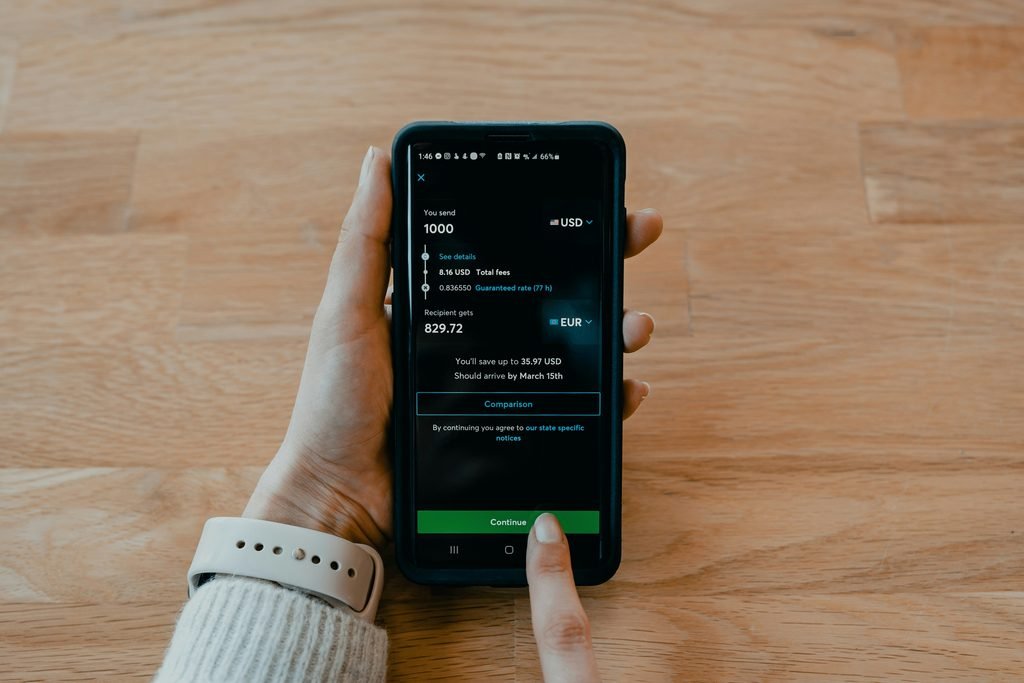
CIT Bank
Frequently near the top of current rate comparisons, often in the 4.0-4.10% range. No linked checking account is required to earn this rate, which sets it apart from several competitors on this list.
The trade-off: CIT typically requires a modest minimum opening deposit, and its mobile app and customer support are generally considered less polished than some larger online banks.
Best fit for someone who wants a strong rate without juggling a second linked account, and doesn’t mind a bank with a smaller physical footprint.
SoFi Checking and Savings
Structured as a combined checking-and-savings account rather than a standalone savings product.
The advertised top rate is a promotional boost, unlocked specifically by setting up qualifying direct deposit — without it, the rate drops to a noticeably lower base tier.
SoFi also offers a new-member cash bonus for enrolling in direct deposit, which can add real value on top of the rate itself. Best fit for someone who already plans to move their paycheck to a new bank anyway, since the direct deposit requirement is a genuine hurdle otherwise.
Ally Bank
No minimum deposit to open, no monthly fees, and a straightforward rate without complex tiering or requirements to track.
Ally’s rate typically sits a bit below the very top of the market, but the simplicity is the actual selling point — there’s no condition to accidentally miss and no fine print to reread every few months. Best fit for someone who specifically wants to “set it and forget it” without monitoring a requirement.
Marcus by Goldman Sachs
No fees, no minimum balance, and a rate commonly cited among the higher standing options without any linked-account or direct-deposit requirement.
Marcus doesn’t offer checking account integration the way SoFi does, so if you want everything in one place, this isn’t that.
Best fit for someone who wants a strong, no-strings rate specifically as a standalone savings account, separate from daily spending.
Bask Bank
Runs meaningfully above the national average, with no minimum opening deposit and no monthly fees.
Less widely advertised than the four accounts above, which sometimes means less competition for promotional offers, but also less brand recognition and a smaller customer service footprint.
Worth comparing directly against the bigger names specifically because it’s often overlooked despite a genuinely competitive rate.
Rates across all five shift regularly, sometimes monthly, so treat any specific number as a snapshot rather than a permanent fact — always check the current rate before moving money.
High-Yield Savings vs. Money Market vs. CD
These three often get lumped together, but they solve slightly different problems.
High-yield savings accounts offer competitive rates with full liquidity — withdraw anytime, no penalty. Best for an emergency fund or money you might need on short notice.
Money market accounts frequently offer similar or slightly higher rates than a standard high-yield savings account, sometimes with check-writing or debit card access, though often with higher minimum balance requirements to avoid fees.
Certificates of Deposit (CDs) lock your rate for a fixed term — often 6 months to 5 years — in exchange for a rate that can run higher than a variable savings rate.
The trade-off: withdrawing early typically triggers a penalty, usually a forfeiture of several months’ worth of interest.
If you’re not sure when you’ll need the money, a high-yield savings account’s flexibility is usually worth more than a CD’s marginally higher locked rate.
If you know you won’t touch a specific sum for a defined period, a CD can be worth comparing directly against your savings account’s current rate.
Don’t Forget: This Interest Is Taxable
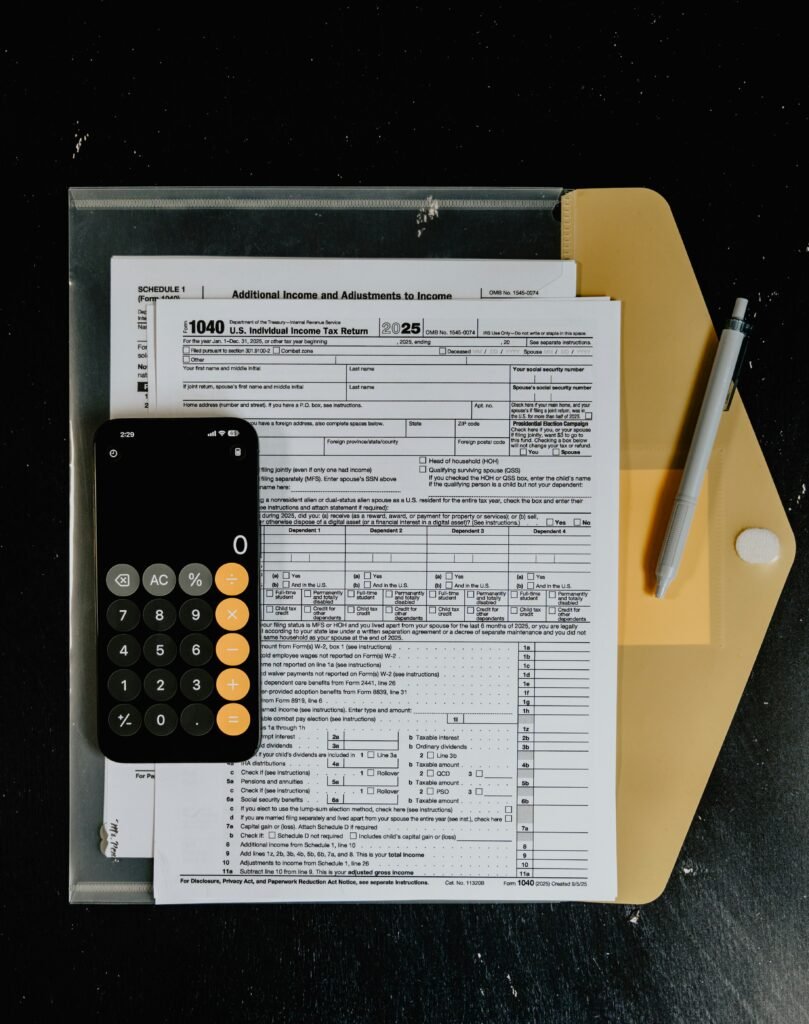
Interest earned in a high-yield savings account is taxed as ordinary income at the federal level, and in most states at the state level too. Your bank will send a Form 1099-INT if you earn $10 or more in interest during the year, and that amount needs to be reported on your tax return.
This doesn’t make a high-yield account a bad choice — even after tax, the after-tax return on a 4%+ account is dramatically higher than a 0.4% account’s return before tax.
It’s simply worth setting aside a small portion of the interest earned, especially on larger balances, so tax season doesn’t come as a surprise.
Automating This So It Actually Happens
Opening the account is only half the work. Set up a recurring automatic transfer from checking on payday, even a modest amount, so the balance keeps growing without requiring a fresh decision each month.
Many high-yield accounts also support round-up features or “safe-to-save” tools that analyze your checking account and automatically move small, unnoticed amounts into savings — a low-effort way to build the balance further once the account itself is earning a competitive rate.
What Actually Matters Beyond the Headline APY
FDIC insurance. Confirm the account is FDIC-insured up to $250,000 per depositor, per institution — nearly all legitimate banks offer this, but it’s worth confirming rather than assuming.
Fee structure. A high APY paired with a monthly maintenance fee can quietly eat into your actual return — look for accounts with no monthly fees specifically.
Access speed. Online-only banks sometimes take 1-3 business days to transfer funds to an external account, unlike a brick-and-mortar bank where you can walk in.
If you need frequent, fast access, factor that into the comparison alongside the rate.
Whether the rate is variable. Nearly all high-yield savings rates float with broader interest rate conditions rather than staying fixed — the number you see today isn’t guaranteed to stay the same next year.
Step-by-Step: Actually Making the Switch
- List your current APY and balance. This is your baseline for comparison.
- Compare at least three current top accounts, not just the first one you see advertised.
- Read the requirements section specifically, not just the headline rate — confirm what you’d actually need to do each month to earn it.
- Open the new account online. Most take under 15 minutes and require no minimum deposit to start.
- Set up a transfer from your old account, and close or empty the old one once the new one is confirmed active.
- Automate future contributions so the balance keeps growing without ongoing effort.
- Set a reminder to recheck rates every 6-12 months, since the account paying the most today may not be the one paying the most a year from now.
Matching an Account to Your Situation
- “I want the simplest possible setup with no conditions to track.” → Ally or Marcus — no fees, no minimum, no monthly requirement to earn the standing rate.
- “I’m willing to meet a direct deposit requirement for a higher rate.” → SoFi’s boosted tier can meaningfully beat a no-strings option, especially with the new-member bonus factored in.
- “I want a strong rate without a second linked account.” → CIT Bank offers this specifically, without requiring you to move your checking account too.
- “I want a competitive rate that’s less commonly advertised.” → Bask Bank is worth comparing directly against the bigger names.
- “I need frequent, fast access to this money.” → Weigh transfer speed alongside APY — a slightly lower rate at a bank with same-day transfers may serve you better than the top number with a multi-day delay.
- “I know I won’t touch a specific amount for a set period.” → Compare a CD’s locked rate directly against your savings account’s current rate before deciding which one wins for that specific sum.
Questions Worth Answering
How much more can I actually earn by switching?
On $10,000, moving from the 0.40% national average to a 4.2% account adds roughly $380 a year in interest, with no additional risk.
Are online-only banks safe?
Yes, as long as the account is FDIC-insured up to $250,000 per depositor — the lack of physical branches doesn’t affect deposit protection.
Why do some accounts advertise 5%+ but I can’t seem to get that rate?
Many top rates are tiered by balance or unlocked only by meeting specific requirements like direct deposit — check the fine print before assuming the headline number applies to you automatically.
Is the interest from a high-yield savings account taxed?
Yes — it’s taxed as ordinary income, and your bank will issue a 1099-INT if you earn $10 or more in a year.
Should I choose a high-yield savings account or a CD?
A savings account if you might need the money on short notice; a CD if you know you won’t touch a specific sum for a defined period and want to lock in a potentially higher rate.
How often do high-yield savings rates change?
Regularly, sometimes monthly, since they’re tied to broader interest rate conditions rather than fixed for a set term.
Before You Close This Out
Check your current savings account’s actual APY today.
If it starts with a zero, that’s the national average, and it’s costing you real money every single month it stays there
. Compare a few current top accounts, read the requirements section, set up automatic contributions, and move the cash — the whole process takes less time than it took to read this article.