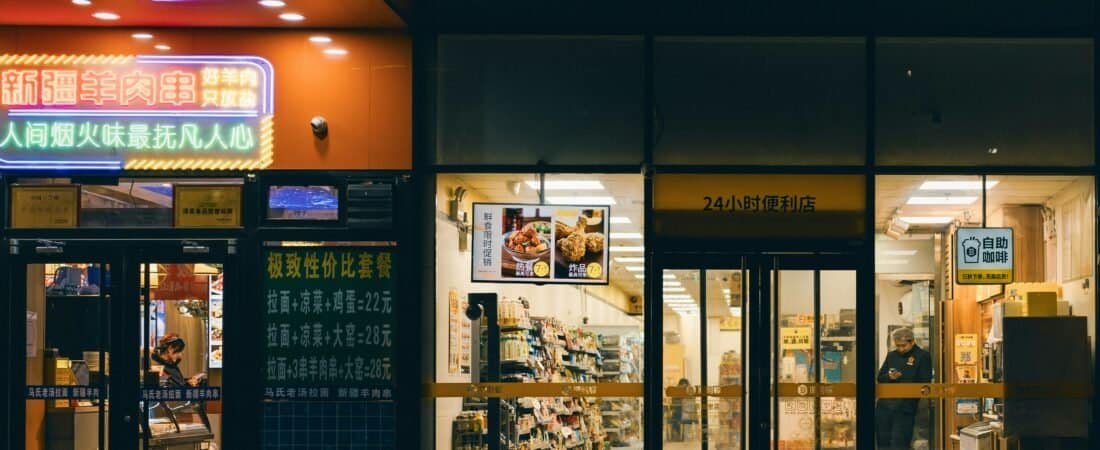
A crypto ATM can be a simple way for a store to earn lease income from a few square feet of floor space. It also comes with real responsibilities that sit mostly with the operator, and a few choices a store makes up front can keep its own position strong. This post covers how hosts get paid, what FinCEN says about operators, what scams look like, and a practical set of terms a store can ask for. Where I am giving my own view, I say so.
Crypto ATM: What Hosting Looks Like
C-Store Dive (March 3, 2026) reports that vendors lease floor space inside stores and pay the host retailer for it. The reported benefits for stores include added foot traffic, passive lease revenue, a footprint of roughly two by two feet, and no staff maintenance. Convenience retailers named as already hosting crypto ATMs include 7-Eleven, Jacksons Food Stores, Nouria and Circle K. The same article lists risks too: scam exposure and the reputational harm that comes with it, and liability risk, particularly under revenue-share arrangements (C-Store Dive).

How a Host Gets Paid Matters
According to C-Store Dive, Bitstop pays most host stores a flat fee, while some hosts get a share of transaction volume. Foley & Lardner’s Patrick Daugherty suggests a flat fee may be safer for retailers, because tying pay to volume could make it easier for the government or a customer to argue the host is part of the same team as the operator and shares its liability (C-Store Dive). That is one lawyer’s suggestion in a news article.
What the Operator Is Responsible For
FinCEN Notice FIN-2025-NTC1, issued August 4, 2025, says kiosk operators are generally money services businesses. They must register with FinCEN within 180 days of starting money transmission and meet recordkeeping, reporting and transaction monitoring requirements, including currency transaction reports and suspicious activity reports (FinCEN). The notice describes kiosks as usually placed in high-traffic locations such as convenience stores, gas stations, cafes and supermarkets (FinCEN). The notice assigns these obligations to operators and does not describe obligations for host stores.
Why Operators and Stores Both Care About Scams
| Data point | Figure |
|---|---|
| Complaints (FBI IC3, 2024) | 10,956+ |
| Reported losses (2024) | About $246.7M |
| Kiosk fees | 7–20% |
FinCEN’s notice cites FBI IC3 data for 2024 of more than 10,956 kiosk-related complaints and about $246.7 million in reported losses, with complaints up 99% and losses up 31% from 2023.
It reports that adults 60 and older were more than three times as likely as younger adults to report a kiosk-related loss, that phone calls were the most common contact method at about 47%, and that kiosk fees run 7% to 20%.
Typical scams involve impersonation of tech support, a government agency, a bank or someone the customer knows, with the scammer guiding the victim step by step while staying in contact (FinCEN). Transactions are difficult to reverse once completed (FinCEN).
The notice also reports that U.S. kiosks grew from 4,128 on January 1, 2019 to 37,342 on January 1, 2025, a 9.0-fold increase, based on self-reported and incomplete data from Coin ATM Radar (FinCEN).
Rules by State
C-Store Dive reports about 20 states have their own rules, including state licensing and limits on daily transactions per person (C-Store Dive). FinCEN’s notice gives California as an example, with a cap of $1,000 per day per customer on kiosk transactions, and notes the Iowa Attorney General sued two kiosk operators in February 2025 (FinCEN).
Terms a Host Can Ask For
The list below is my own suggestion, not a legal requirement, and it builds on points from the sources.
- A flat lease fee rather than a volume-based share, following the point above from Daugherty.
- The operator’s reputation and history. Daugherty advises checking these before leasing space (C-Store Dive).
- A written statement of who the registered operator is and who handles compliance.
- A copy of the operator’s FinCEN registration and any required state licenses. FinCEN lists operating without registration or required state licenses as a sign of a non-compliant operator (FinCEN).
- Scam warnings and transaction limits on the machine. C-Store Dive reports machines display warnings, and Bitstop is developing ways to flag suspicious transactions before they complete (C-Store Dive).
- Indemnification language in which the operator covers the host’s losses from the operator’s own conduct.
- Reasonable exit terms so the store can remove the machine if circumstances change.
What the FTC Says Scammers Do at the Machine, and a Sign Your Store Can Post
A second federal source adds numbers to the scam picture. The FTC reports that over $110 million was lost to Bitcoin ATM scams in 2023, nearly tenfold the 2020 level, and that losses topped $65 million in the first half of 2024, with a median loss of $10,000. Consumers over 60 were more than three times as likely as younger adults to report losing money (FTC). The FTC and FinCEN measure different things from different data, so their totals should not be added together; the FinCEN figures above come from FBI IC3 complaints (FinCEN).
The FTC describes the pattern: scammers create an urgent reason to pull cash from a bank account and put it in a Bitcoin ATM, often claiming it will protect savings, and scanning the QR code the scammer supplies sends the cash straight to the scammer’s crypto account. Most losses come from government impersonation, business impersonation and tech support scams (FTC).
To see what that costs a customer, take the FTC’s $10,000 median and FinCEN’s reported 7% to 20% kiosk fee range. At 7% the fee is $10,000 × 0.07 = $700, and at 20% it is $10,000 × 0.20 = $2,000, before any scam loss (FinCEN). The FTC page contains no guidance for ATM operators or host businesses, so what follows is my suggestion built from its consumer tips.
A host can post a short sign near the machine using the FTC’s own tips:
- Anyone who says you must use a Bitcoin ATM, buy gift cards or move money to protect it is a scammer; real businesses and government agencies will never do that (FTC).
- Never withdraw cash in response to an unexpected call or message (FTC).
- Slow down and talk with someone you trust before acting (FTC).
The sign costs little, gives a customer on the phone a reason to pause, and pairs well with the staff routine in the next section and the warnings the operator’s machine already shows.
A Store Plan for Customers Who Seem to Be Coached
FinCEN describes red flags in terms of kiosk operators and financial institutions, such as older customers with no kiosk history making large transactions, or customers withdrawing cash after being directed by someone on the phone (FinCEN). In my view, a store can add a simple routine of its own: decide in advance who staff should contact if a customer seems to be on the phone with someone directing them at the machine. Writing the plan down before anything happens seems sensible to me.
My Take on Putting a Crypto ATM in Your Store
- In my view, the encouraging part of the documents is how clearly responsibilities are assigned: FinCEN puts registration and reporting on operators, and the C-Store Dive article notes stores can rely on operators with strong compliance programs.
- In my view, the contract is the host’s main tool. The flat fee, the registration copy and the indemnity are all things a store can ask for before signing.
Sources
- C-Store Dive: Pros and cons of crypto ATMs for convenience stores (Mar. 3, 2026)
- FinCEN: Notice FIN-2025-NTC1 (Aug. 4, 2025)
- FTC: New FTC data shows massive increase in losses to Bitcoin ATM scams (Sept. 2024)
This article offers general information and my own opinions, not financial, tax, or legal advice. Laws, tax rules, and products change and can differ by location, so check current official sources and talk to a qualified professional about your own situation.
Related reading: Operating a Crypto Kiosk Isn’t Like Any Other Small Business and The Exemption Everyone Cites for Crypto Payments Doesn’t Actually Apply.