
With crypto, both the risk and the safety net start with you.
There’s no FDIC standing behind a self-custody wallet the way there is behind a bank account.
But digital asset insurance genuinely exists in several real forms, and knowing exactly what each one covers — and what it doesn’t — is what turns “figure it out yourself” into an actual, manageable plan for anyone researching digital asset insurance for the first time.
Here’s exactly how to do it.
Why This Isn’t Like Bank Insurance
A bank account is backed by the FDIC up to $250,000 automatically, with no action required from you.
Crypto has no equivalent automatic backstop. In 2023 alone, over $1.7 billion was lost to crypto-related theft and fraud, and most of those losses came from DeFi protocols and hot wallets specifically — the exact categories individual holders interact with daily.
The upside of this setup is one worth naming clearly: since nothing is automatic, every layer of protection you do have is one you deliberately chose and set up. That’s a very different, and more controllable, situation than it might first sound.
The Three Real Categories of Coverage
Confusing these three categories is the single biggest reason people discover an “exclusion” only after the money is already gone. Each one covers a genuinely different risk.
Custodial insurance. This covers theft or a breach at the company holding your assets — an exchange getting hacked, for instance. Critically, the exchange itself buys this policy, not you personally, and it typically only covers a portion of what the exchange holds. Coinbase, for example, carries a $255 million policy — but that figure covers their hot wallet specifically, not every dollar held across every customer account.
Always check whether a platform publishes proof-of-reserves (using Merkle Tree or zero-knowledge proof methods) so you can verify customer assets are actually matched, rather than taking a stated coverage number at face value.
DeFi and smart contract insurance. This protects you if a specific protocol you’re using — a lending platform, a decentralized exchange — gets exploited through a bug in its code.
Nexus Mutual is the best-known provider here, offering individual coverage for staking, lending, or yield farming positions, with annual premiums typically running 0.5% to 1% of the insured value. This is coverage you actively buy yourself for a specific protocol, not something that comes bundled with using it.
Personal or retail wallet insurance. This is the category closest to what an individual holder searching for digital asset insurance actually wants: protection for your own hot wallet or self-custody setup against phishing, device compromise, or losing access.
Coincover is the leading name here, offering what it calls “wallet warranties” — active fraud monitoring paired with fast refunds if a loss occurs, provided you followed their required security practices going in.
It’s worth being clear about how these three interact, since they don’t automatically stack. Being on an insured exchange (custodial) says nothing about coverage for a DeFi position you’ve moved funds into, and neither of those says anything about a separate hardware wallet sitting at home.
Each layer has to be evaluated and, where relevant, purchased on its own — there’s no single umbrella policy that spans all three by default.
What Most Policies Actually Exclude
This is the part worth reading closely before assuming any policy covers you the way you’d expect.
Common exclusions across personal and custodial policies include user error, misplaced private keys, phishing attacks the user was tricked into completing, and general self-custody mishaps that didn’t involve a breach of the provider’s own systems.
In plain terms: insurance in this space is built to cover a system failing, not you personally making a mistake.
A Coincover-style wallet warranty is the closest product to bridging that gap, but it comes with a real trade-off — it only pays out if you can demonstrate you followed the specific security practices the policy requires, which puts a real burden of proof on the policyholder in a way traditional insurance often doesn’t.
This pattern isn’t unique to crypto, even if it feels sharper here. Traditional home insurance similarly excludes damage from clear negligence — leaving a door unlocked, ignoring a known maintenance issue — while covering a genuine break-in.
The difference in crypto is that “user error” covers a much wider and more common set of everyday actions: clicking a convincing phishing link, approving a malicious smart contract transaction, or simply losing a seed phrase.
Those aren’t rare edge cases the way a specific negligence claim might be in a home policy — they’re the leading cause of individual losses in this space, which is exactly why reading the exclusion list matters so much more here than it might for a policy you’re used to treating as a formality.
A Practical, Step-by-Step Path to Actually Getting Covered
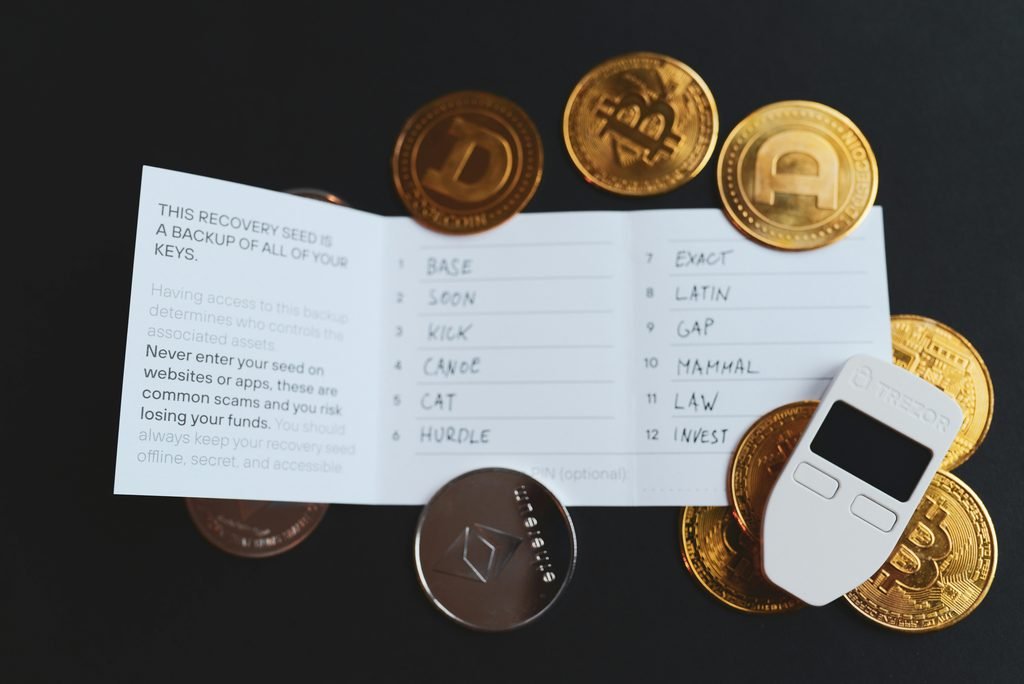
Step one: Secure the foundation first. No insurance product replaces basic security — a hardware wallet, a properly backed-up seed phrase, and the storage practices covered in estate planning for digital assets are the baseline every insurance layer sits on top of, not a substitute for it.
Step two: Choose exchanges with verifiable protection. Favor platforms that publish regular, third-party-audited proof-of-reserves reports and disclose the actual size and scope of their custodial insurance, rather than a vague “your funds are insured” claim on a marketing page.
Step three: Insure specific DeFi positions individually. If you’re staking, lending, or yield farming on a specific protocol, look at Nexus Mutual or a comparable decentralized coverage option sized to that specific position — this is coverage you opt into deliberately, position by position, not something automatic.
Step four: Consider a wallet warranty for self-custody holdings. If a meaningful amount sits in a personal hardware or software wallet, a Coincover-style product is the most direct way to add a real financial backstop — but only after confirming exactly which security practices you must follow to keep that coverage valid.
Step five: Read the exclusion list before you need it, not after. This is the single most repeated piece of advice across every source covering this space, for good reason — the time to discover what isn’t covered is during setup, not during a loss.
Step six: Revisit the plan whenever your holdings change meaningfully. Moving a large amount into a new DeFi protocol, switching exchanges, or significantly growing a position are all natural checkpoints to confirm the coverage you set up still matches what you actually hold — a plan built for a $2,000 wallet doesn’t automatically scale to a $50,000 one.
Sizing This to How Much You Actually Hold
Not every holding justifies the same level of coverage, and it’s worth being honest about where the cost-benefit actually lines up.
For a modest hot-wallet balance used for everyday transactions, strong security practices alone — a reputable exchange, two-factor authentication, a hardware wallet for anything beyond spending money — may reasonably be judged sufficient without adding a paid insurance layer on top.
For larger holdings, particularly anything approaching or exceeding what you’d insure a car or a meaningful piece of property for, the calculation shifts. A Nexus Mutual premium in the 0.5–1% range, or a Coincover-style wallet warranty, starts to look like a small, rational cost against a loss that could otherwise be total and unrecoverable.
Institutional-scale holders — and increasingly some individuals with very large positions — combine multiple layers at once: audited custody, dedicated crime insurance from providers like Evertas or through brokers like Aon and Marsh, and staking-specific coverage (Munich Re offers policies specifically covering slashing risk on proof-of-stake networks like Ethereum).
That level of layering isn’t necessary for most individual holders, but it illustrates that this market scales with genuine institutional demand behind it — it isn’t a fringe product.
The Market Context Worth Knowing

Crypto insurance is still a small slice of the broader insurance world — roughly $9.5 billion in 2025, against a global digital insurance market valued at $431.8 billion, putting it at about 2.2% of that wider market.
That’s worth knowing for two reasons. It confirms this is a genuinely growing, increasingly mainstream category rather than an experimental niche, and it also explains why premiums can run higher than equivalent traditional coverage — insurers are still pricing a relatively young risk category with less historical claims data to draw on than, say, auto or home insurance has built up over decades.
It also means the market is still actively shaping itself. New providers, updated exclusion language, and expanded coverage categories are appearing at a faster pace here than in most established insurance lines, which is a further reason to re-check available options periodically rather than assuming the landscape you researched a year ago still reflects what’s available today.
A Practical Way to Decide
- Holding a modest amount for everyday use? Strong security fundamentals may reasonably substitute for paid insurance at this scale.
- Actively using DeFi protocols? Price out per-position coverage through Nexus Mutual or a comparable provider rather than assuming you’re covered by default.
- Storing a significant amount in self-custody? Look seriously at a wallet warranty product, and confirm the exact security steps required to keep it valid before you need to file a claim.
- Choosing between exchanges? Prioritize published proof-of-reserves and clearly disclosed custodial insurance scope over a platform that simply states “your funds are insured” with no specifics.
- Staking on a proof-of-stake network? Ask specifically whether slashing risk is covered by anything — most personal wallet insurance doesn’t include it, and it’s a distinct risk from theft or hacking.
Questions Worth Answering
Does homeowner’s or renter’s insurance ever cover stolen crypto? Rarely, and only in specific, narrow circumstances depending on the exact policy wording — most standard homeowner’s policies were not written with digital assets in mind, and coverage should never be assumed without confirming it directly with the insurer.
Is decentralized insurance (like Nexus Mutual) as reliable as traditional insurance? It operates differently — payouts are typically governed by community assessment of a claim rather than a traditional claims adjuster — and it carries its own smart contract risk layered on top of the risk it’s meant to cover, which is worth understanding before relying on it as a sole safety net.
If an exchange says it’s “insured,” does that mean my specific account is covered? Not necessarily. Exchange insurance typically covers a defined pool (often the hot wallet) up to a stated limit, which may not scale to cover every individual account in full if a large-scale breach occurred.
Is it worth insuring a small amount of crypto, or does it only make sense at scale? The math generally favors insurance more as holdings grow, since premiums are usually a percentage of value insured — for a small holding, strong security practices alone often provide better value than a paid policy.
The One-Line Version
Both the risk and the safety net in crypto sit with the holder, not with a government program — but real digital asset insurance genuinely exists across custodial, DeFi, and personal wallet categories, and knowing which one actually applies to your situation, and reading the exclusions before you need them, is what turns “you’re on your own” into a plan you actually control.
Start with the security fundamentals, layer in the specific coverage that matches how you actually hold your assets, and revisit that plan as your holdings grow — that’s the entire difference between hoping nothing goes wrong and actually being covered if something does.