
Whether a crypto IRA’s extra fee is worth it depends on what you’re buying with it. This article gives the structure of the decision and the fee math with assumed numbers, as my own reasoning.
The Cheaper Default to Compare Against
In my view, the baseline for comparison is a regular Roth IRA at a brokerage that holds a spot crypto exchange-traded fund, if one is offered. That setup uses an ordinary IRA custodian and a fund with its own expense ratio. If your plan is simply to hold Bitcoin or Ethereum for decades, this baseline is the one I’d price a crypto IRA against.
Three Reasons a Dedicated Crypto IRA Might Be Worth Paying For (My View)
- You want tokens an ETF doesn’t hold. In my understanding, spot crypto ETFs cover a short list of assets, so wider token access may require a dedicated crypto IRA.
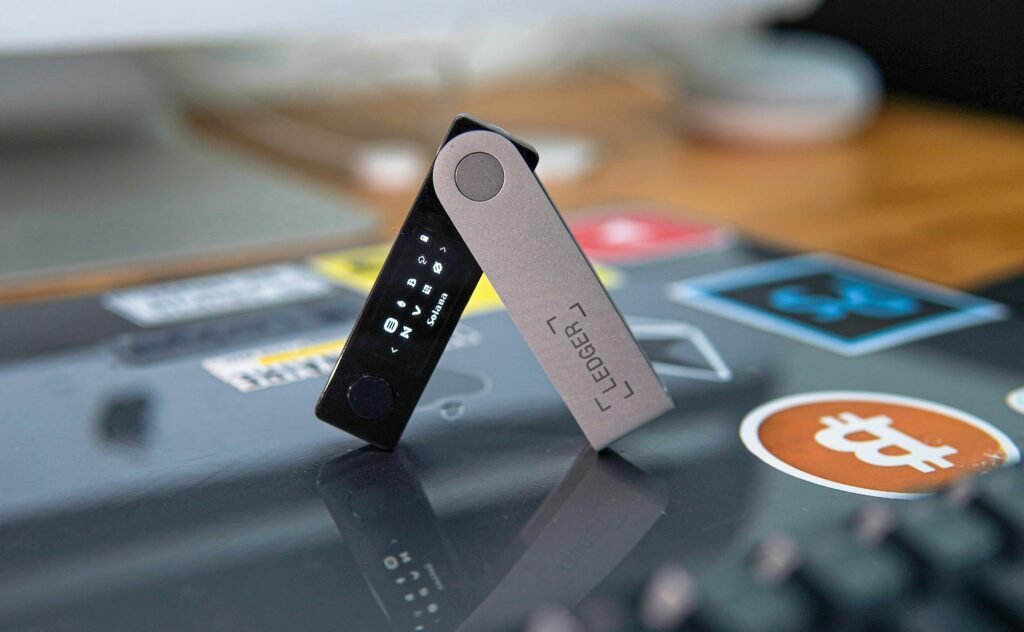
- You want to hold some of the keys yourself. Unchained’s comparison page describes its IRA as a collaborative multisig where the client holds 2 of 3 keys and Unchained holds 1, in contrast to fully custodial providers where the provider holds all keys (Unchained comparison page). That page is published by Unchained, so it is self-interested. It also says it is current as of May 2026.
- You invest small, recurring amounts. Account and per-trade minimums differ by provider, and the same Unchained page lists a $1,000 account minimum for iTrustCapital and a $2,000 minimum per trade for Unchained. These figures can change, so check them directly. My reasoning is that a high minimum can delay when small contributions get invested.
Why a Flat Fee Behaves Differently
A flat annual fee is a bigger share of a small account and a smaller share of a large one. With an assumed flat fee of $250: on a $10,000 account that’s 2.5%, and on a $100,000 account it’s 0.25%. The $250 figure matches what Unchained’s page lists per IRA vault, but I’m using it only as an illustration, since pricing can change.
What a Percentage Fee Costs Over 20 Years
An assumed example: $10,000 grows for 20 years at an assumed 7% a year before fees. With no fee it reaches about $38,697. With an assumed 2% annual fee (a net 5%), it reaches about $26,533. The gain falls from $28,697 to $16,533, which is roughly 42% less gain. The return and fee are made up, and I’m subtracting the fee from the return as a simplification.
My reasoning is that a fee charged every year on a growing balance keeps taking a share of the growth, while a one-time cost doesn’t. That’s why I’d compare the total cost, including trading fees, annual fees and minimums, against my expected balance and how often I’d trade.
The IRA Rules That Apply Either Way
The IRS says the 2026 IRA contribution limit is $7,500 (up from $7,000), with a $1,100 catch-up for age 50 and over, and the 2026 Roth IRA income phase-out range is $153,000 to $168,000 for single and head of household filers and $242,000 to $252,000 for married filing jointly (IRS: 401(k) limit increases to $24,500 for 2026, IRA limit increases to $7,500). Those limits apply to a Roth IRA whether it holds a fund at a brokerage or crypto at a dedicated provider, so the fee question is separate from the eligibility question.
What the SEC Says About Self-Directed IRAs
A crypto IRA is typically a type of self-directed IRA, which the SEC’s investor education site describes as an IRA held by a custodian that lets you invest in a wider range of assets, including crypto assets. It says custodians hold and administer the assets but generally don’t evaluate an investment’s quality or legitimacy, that the risk of loss falls largely on you, and that these accounts can carry higher fees than many other account types. It also notes that complex IRS rules mean mistakes can cause taxes, penalties or loss of tax-deferred status (SEC Investor.gov: Self-Directed IRAs and the Risk of Fraud).
The SEC’s practical tips are encouraging because they are easy to follow: independently verify values and account information, be cautious of unsolicited offers urging you to move retirement money, confirm that the person and the investment are registered or licensed with the SEC, FINRA or your state securities regulator, be skeptical of guaranteed returns, and consult a licensed professional, an attorney or a tax advisor before investing. It also suggests confirming a nonbank custodian against the IRS list, while noting the list is not complete.
A Flat Fee at Different Balances (Assumed Numbers)
Using the assumed flat fee of $250 a year:
| Assumed account balance | Fee as a share of balance |
|---|---|
| $5,000 | 5.00% |
| $10,000 | 2.50% |
| $50,000 | 0.50% |
| $100,000 | 0.25% |
And on the 20-year example above, the assumed 2% fee costs $12,164 of ending balance ($38,697 − $26,533). Both examples are arithmetic on assumed inputs, not provider prices.
A Practical Way to Decide
- Want simple long-term BTC or ETH exposure? Price an ETF in a regular Roth IRA first.
- Want tokens beyond what ETFs hold? Compare dedicated crypto IRAs’ current trading fees, annual fees and minimums on their own pricing pages.
- Want to hold some keys? Read the provider’s own description of how keys are split and who holds them.
- Investing small or recurring amounts? Check the minimums first.
- Always model the total cost against your balance and trading frequency, as in the example above.
- Verify the provider using the SEC’s tips above before moving any retirement money. That is my suggestion.
Questions About Crypto IRA Fees
Can I hold both a crypto IRA and a regular Roth IRA? Contribution limits apply across all your IRAs, so check the current IRS limit.
Is a flat annual fee always better? No. The math above shows it’s a bigger share of a small account and a smaller share of a large one.
Does a higher fee buy better security? Not by itself, in my view. Fully custodial providers hold all the keys, and a fee doesn’t change that. I haven’t evaluated any provider’s security.
The One-Line Version
In my view, an extra fee for a crypto IRA is worth considering only when it buys something an ETF in a regular Roth IRA doesn’t, such as wider token access, some key control, or minimums that fit how you invest. Compare current pricing directly and run the math with your own balance.
My Take on Crypto IRAs vs. Regular Roth IRAs
- In my view, a cheaper, simpler account is the right default, and a higher fee is worth paying only when it buys something specific that you actually need.
- In my suggestion, write down in one line what the extra fee buys you; if you can’t, the baseline account is probably enough.
Sources
- Unchained: Unchained vs. iTrustCapital comparison (published by Unchained, current as of May 2026)
- IRS: 401(k) limit increases to $24,500 for 2026, IRA limit increases to $7,500
- SEC Investor.gov: Self-Directed IRAs and the Risk of Fraud
Related reading: Roth IRA or Crypto for Retirement? The 20-Year Math and Opening a Brokerage Account Isn’t the Hard Part — Choosing the Account Type Is.
This article offers general information and my own opinions, not financial, tax, or legal advice. The figures in worked examples are assumed. Laws, tax rules, and products change and can differ by location, so check current official sources and talk to a qualified professional about your own situation.