
Digital asset insurance exists in a few forms, but none of them works like a bank’s FDIC coverage. In my view, the useful move is to learn what each type covers, and what it says it doesn’t, before you rely on it. I limit the facts below to what I could check on the providers’ own pages.
Why This Isn’t Like Bank Insurance
FDIC insurance covers deposits up to $250,000 per depositor, per insured bank, per ownership category, and it does not cover crypto assets (FDIC). Coinbase says the same about its own customers’ digital currency: it is “not FDIC, NCUSIF, or SIPC insured” and may lose value (Coinbase). So any protection you have comes from products you or your platform arranged.
Three Kinds of Coverage
Custodial insurance (bought by the platform). Coinbase says its parent’s crime insurance protects “a portion of digital currencies held across our storage systems” against theft, including cybersecurity breaches. It says the policy does not cover losses from unauthorized access to your account due to a breach or loss of your credentials, and it excludes NFTs. Coinbase also says it will “endeavor to make you whole” after a covered security event, but total losses may exceed insurance recoveries (Coinbase). In my view, that wording is the example to learn from: read the exact scope, not just “insured.”
Smart contract cover (bought by you). Nexus Mutual is one provider. Per its developer documentation, you must be a member to buy cover, and the premium is Cover Amount × Annual Price × (cover length in days ÷ 365). Claims are voted on by claim assessors over a 72-hour window followed by a 24-hour cooldown, and if a claim is rejected the claim deposit is forfeited (Nexus Mutual docs).
An assumed example of that formula: $10,000 of cover at a 3% annual price for 90 days costs $10,000 × 0.03 × 90 ÷ 365 = $73.97. The 3% is made up for illustration; real prices vary by product.
Wallet protection (bought by you). Coincover’s FAQ says that if a transaction is marked “Green” by its API and later proves fraudulent within the risks it protects against, the claim is honored, and that protection starts only after onboarding steps are complete. It also describes a Ledger Recover option for restoring keys to a Ledger device if you lose access to your recovery phrase (Coincover). Conditions differ by wallet and product, so I’d read the current terms before relying on any of it.
How the Three Fit Together
In my view, these don’t stack automatically. Coverage at an exchange says nothing about a position you moved into a DeFi protocol, and neither says anything about a hardware wallet at home. My reasoning is that each layer has to be evaluated separately, and I haven’t seen a single policy that spans all three.
Reading the Exclusions
The Coinbase and Coincover pages above show the pattern: coverage is tied to defined events, and conditions apply. I can’t tell you what every policy excludes, so I’d read the exclusion list of any product before buying. Losing your own keys or approving a bad transaction yourself are the cases to check first, since you’d likely be the one who made the mistake.
A Step-by-Step Path
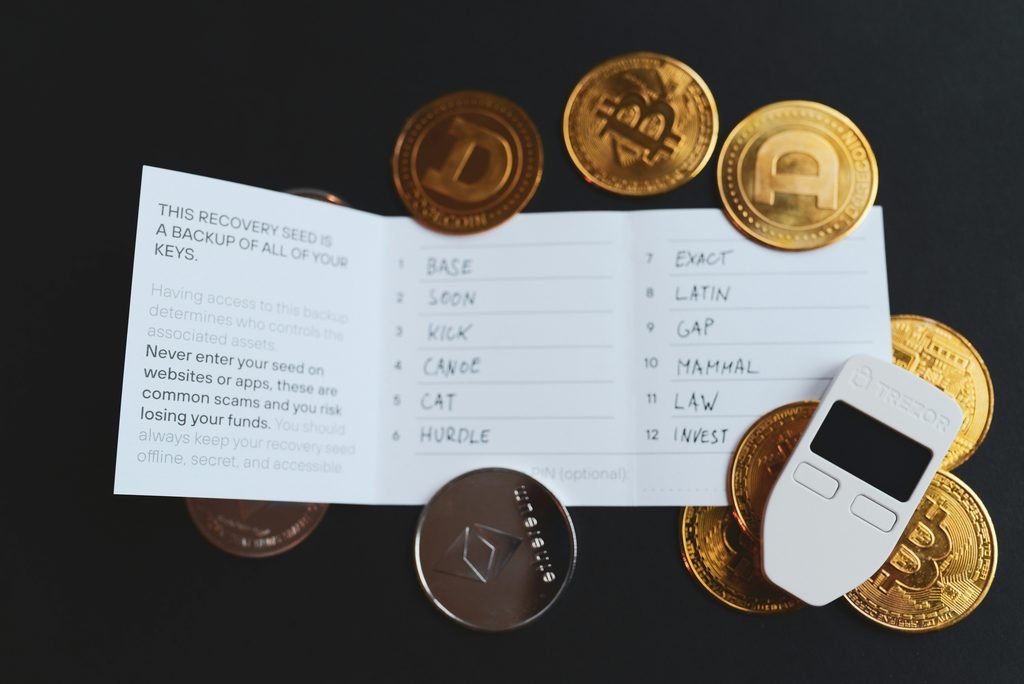
- Secure the foundation first. In my view, a hardware wallet and a properly backed-up seed phrase come before any insurance product.
- Read what your platform actually says. Look for the scope of its custodial coverage on its own legal page, as in the Coinbase example above.
- Price any DeFi cover per position. Use the provider’s own premium formula and confirm the product’s cover wording.
- Check the conditions for wallet protection. Find out what steps you need to complete for coverage to apply.
- Re-check when your holdings change. My suggestion is to revisit this when you move funds or add a new platform.
Sizing This to What You Hold
Paying for cover makes more sense as the amount you could lose grows. For a small balance used for everyday spending, strong security habits may be enough, though that’s a judgment about cost versus benefit and not something I can prove. For larger amounts, compute the premium with the formula above and compare it with the loss it would offset.
A Practical Way to Decide
- Small balance for everyday use? Security habits first; weigh whether a premium is worth it.
- Using DeFi protocols? Price cover per position and read the cover wording.
- Large amount in self-custody? Look at wallet protection terms and what you must do to keep it valid.
- Choosing an exchange? Prefer one that publishes specifics about what its insurance covers.
- Staking? Ask whether anything covers validator penalties (slashing), since it’s a different risk from theft.
Questions About Digital Asset Insurance
Does homeowner’s or renter’s insurance cover stolen crypto? I don’t know for any given policy, so I wouldn’t assume it. The policy’s wording is what decides.
If an exchange says it’s “insured,” is my account covered? Coinbase’s own page says only “a portion” of assets is protected and that losses may exceed recoveries, so I’d read the specifics, not the headline.
Is decentralized cover as reliable as traditional insurance? It works differently: claims are voted on by assessors, per the Nexus Mutual docs above. It also adds smart contract risk, so I wouldn’t treat it as a sole safety net.
The One-Line Version
Crypto has no FDIC-style backstop, so the protection you have is what you or your platform arranged. The plan is: secure the basics, read each product’s actual scope and exclusions, and re-check as your holdings change.
Sources
- FDIC: Understanding Deposit Insurance
- Coinbase: insurance and customer funds
- Nexus Mutual: cover buyer user flow
- Coincover: FAQ
This article offers general information and my own opinions, not financial, tax, or legal advice. The figures in worked examples are assumed. Laws, tax rules, and products change and can differ by location, so check current official sources and talk to a qualified professional about your own situation.