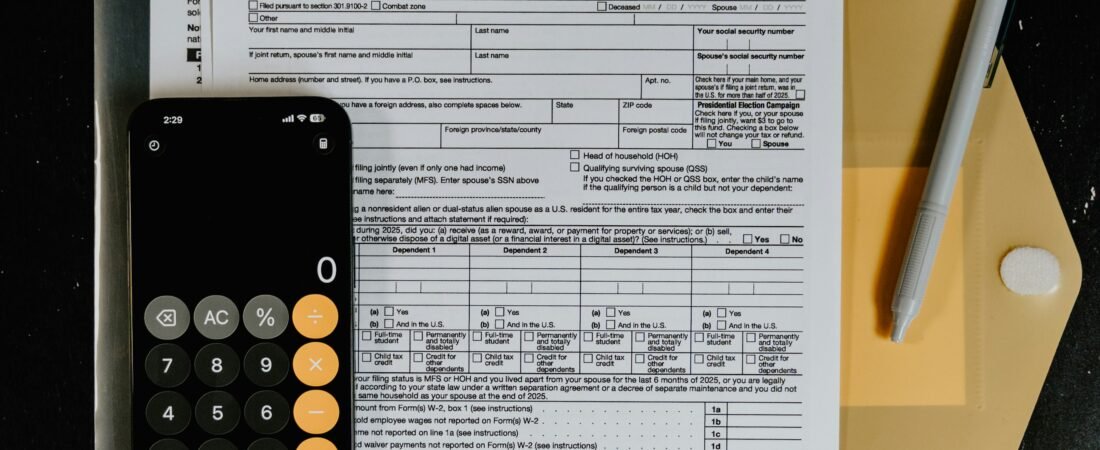
If you have H-1B crypto mining income, two separate questions arise: how the income is reported for tax, and what your H-1B work authorization allows. I could not find any authority linking the tax schedule to your H-1B status. This post lays out the verified pieces of each side, give a worked example with assumed numbers, and suggest a practical order of steps so you can move forward with confidence.
H-1B Crypto Mining Income: The Tax Side
The IRS digital assets page says income from forks, staking and mining goes on Schedule 1 (Form 1040), and that payments to an independent contractor and sales of digital assets to customers are reported on Schedule C (IRS Digital Assets). The same page says to keep records of the U.S.-dollar fair market value of digital assets received as income. A Journal of Accountancy article on the IRS’s first virtual currency guidance says the fair market value on the date of receipt is included in gross income, and that if mining is a trade or business and the miner is not an employee, the net earnings are self-employment income subject to self-employment tax (Journal of Accountancy).
Business or Hobby?
The IRS fact sheet on hobbies asks whether the activity is run like a business, with complete and accurate books and records, whether methods change to improve profitability, the taxpayer’s expertise, whether it is a main source of income, and whether a profit is made or expected. Income from an activity without a profit motive goes on Schedule 1, line 8, and a loss from it can’t offset other income (IRS). A law-firm article lists nine factors the tax code uses and says expenses of an activity not engaged in for profit can’t be deducted under IRC §183, with miscellaneous itemized deductions suspended for tax years 2018 through 2025 (McLane Middleton).
Self-Employment Tax
The IRS says self-employment tax is 15.3% (12.4% Social Security plus 2.9% Medicare), generally on 92.35% of net earnings, and usually applies once net earnings from self-employment reach $400 (IRS Topic 554).
Assume net mining profit of $5,000 for the year, treated as self-employment income. Then $5,000 × 92.35% × 15.3% = $706.48. That is an illustration with assumed numbers, not a prediction for your return.
| Item | Amount (assumed) |
|---|---|
| Net mining profit | $5,000 |
| SE tax at 15.3% of 92.35% | $706.48 |

The H-1B Side of Crypto Mining Income
UNC’s international services office says H-1B workers are authorized to work only for the employer that filed the petition, under the terms in that petition (UNC International Services). The University of Arizona’s H-1B FAQ says self-employment is treated as employment and is not allowed in H-1B status unless separately authorized by USCIS, which it calls rare (University of Arizona). Neither page addresses crypto mining or passive investments.
A law-firm blog draws a line between passive income, which it says is generally allowed, and active income, which it says could violate visa conditions. It places crypto held as an investment on the passive side and says day trading, staking or running a crypto business is where it “gets murky” (American Visa Law Group). That is one firm’s view and not a USCIS statement.
My Reasoning, Not an Authority
This is my own reasoning. Tax classification and immigration status are separate legal questions with different tests, so the answer to one doesn’t decide the other. I would not choose how to report income to look better for immigration purposes, because a return should reflect the facts.
How to Get Started With H-1B Crypto Mining Income
- Report your income according to the facts, using the IRS hobby and business factors above. That is my view.
- Keep records of the dollar value of coins on the day you receive them, the equipment you use and the costs you pay. The IRS asks for fair market value records (IRS).
- Talk to the attorney before expanding from holding into anything that looks like running an operation, since the sources above describe self-employment as outside H-1B authorization.
- Set aside money for tax as you go, using the SE tax math above as a rough guide if your income is treated as self-employment.
H-1B Crypto Mining Income: Questions Answered
Does a business filing violate H-1B status? I couldn’t find an authority that says so, and I won’t guess.
Does staking raise the same tax question? The IRS page groups forks, staking and mining on Schedule 1 (IRS).
Related H-1B Crypto Mining Income Reading
For the work-authorization questions behind H-1B crypto mining income, see Six Factors Decide If Your Crypto Is “Work” on H-1B.
My Take on H-1B Crypto Mining Income
- In my view, the tax filing and the visa question are best answered together by two professionals who share the facts.
- In my suggestion, for H-1B crypto mining income, good records are the most useful single step, because both questions turn on what the activity actually involved.
Sources
- IRS: Digital assets
- IRS: Know the difference between a hobby and a business
- IRS: Topic 554, Self-employment tax
- Journal of Accountancy: IRS virtual currency guidance
- McLane Middleton: Business vs. hobby
- UNC International Services: H-1B work authorization
- University of Arizona: H-1B employment FAQ
- American Visa Law Group: H-1B holders and investing
This article offers general information and my own opinions, not financial, tax, or legal advice. The figures in worked examples are assumed. Laws, tax rules, and products change and can differ by location, so check current official sources and talk to a qualified professional about your own situation.