
A budget that actually works when your income changes month to month has to break one rule that every traditional budgeting method assumes without saying it out loud: that you know how much money is coming in before the month starts.
Freelancers, gig workers, and commission-based earners don’t get that luxury.
One month lands $8,000. The next lands $2,400. A budget built for a steady paycheck simply breaks the moment income does that.
Why Standard Budgeting Advice Fails Here
Most budgeting frameworks follow the same sequence: know your income, allocate it to categories, spend accordingly.
With irregular income, step one collapses entirely — you genuinely can’t allocate money you don’t know you’ll have yet.
This isn’t a sign that budgeting is impossible with variable income. It’s a sign the entire approach needs to adapt before anything else works.
Step One: Find Your Real Baseline
Before building anything, look back at your last 6-12 months of actual income.
- List every month’s actual income for the past 6-12 months.
- Identify the single lowest month in that window.
- Use that number — not your average — as your working baseline going forward.
If your income over the past year ranged from $3,000 to $9,000, budgeting off the average ($6,000, for example) sets you up to fall short in every month below that line.
Budgeting off the $3,000 floor instead means every month, even your worst one, is already accounted for — and every month above that becomes a bonus, not a rescue.
Step Two: Build a Zero-Sum Budget on That Baseline
Once you know your floor number, assign every single dollar of it a specific job before the month begins.
What counts as an “expense” here:
- Rent, utilities, groceries, insurance, minimum debt payments (the non-negotiables)
- Taxes (more on the exact percentage below)
- Retirement contributions
- Emergency fund contributions
- Specific savings goals (a vacation, a down payment, a piece of equipment for your work)
Treating savings goals as line-item expenses, rather than “whatever’s left over,” is the detail most beginners skip — and it’s exactly why their savings never actually accumulate.
Step Three: Get Your Tax Set-Aside Percentage Exactly Right
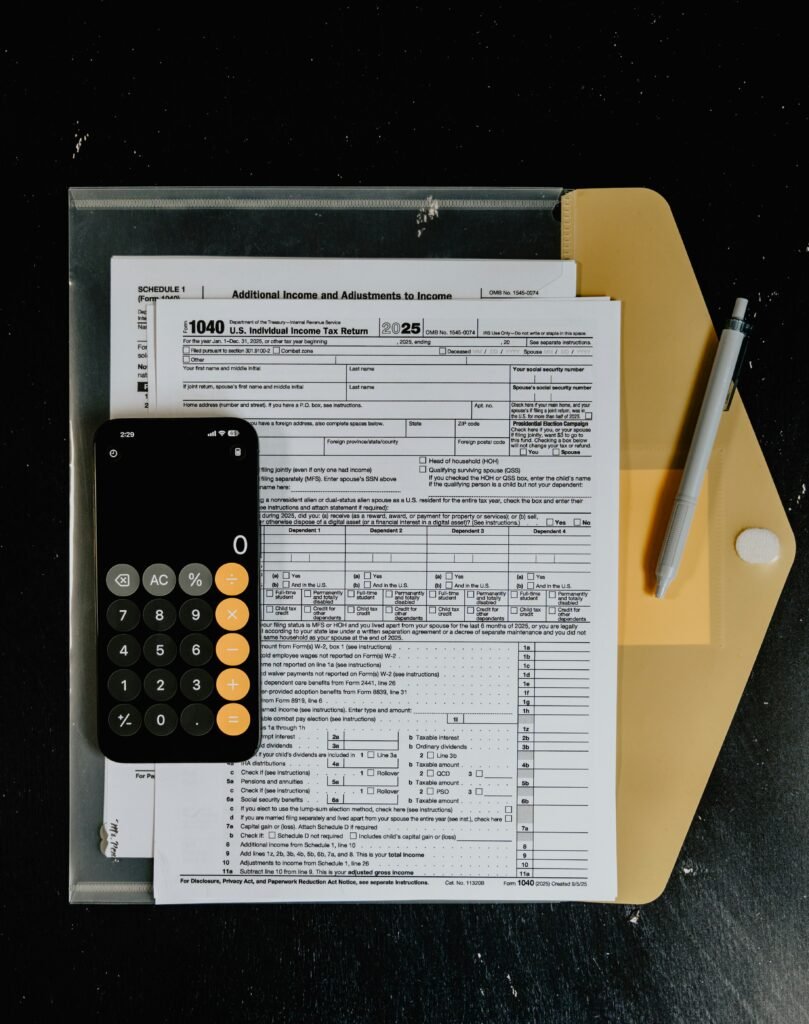
This is where most first-year freelancers get blindsided, and it deserves real precision, not a vague “put some aside” gesture.
The Real Math Behind the Number
Self-employment tax is 15.3% on net earnings, calculated on 92.35% of your income — this covers Social Security and Medicare, both halves, since nobody’s splitting it with an employer anymore.
Add federal income tax on top, and the standard, well-supported recommendation is to set aside 25-30% of net income for most freelancers earning under $100,000. If you live in a state with income tax, add another 5-10% on top of that.
A Worked Example at $100,000 Net
| Tax | Amount |
|---|---|
| Federal income tax (~22% bracket) | ~$15,000 |
| Self-employment tax (15.3% on $100k × 0.9235) | ~$14,130 |
| Total federal | ~$29,130 |
That’s before state tax. At this income level, setting aside 30% of every payment ($30,000) comfortably covers the federal total with a small buffer left over.
The Simpler Shortcut
If the formulas feel like too much, use last year’s actual effective tax rate plus 2-3 percentage points as your buffer.
Paid 28% total last year? Set aside 30-31% of every payment this year. Done.
Quarterly Deadlines You Cannot Ignore
If you expect to owe $1,000 or more for the year, the IRS requires quarterly estimated payments — not one lump sum in April.
The 2026 due dates: April 15 (Q1), June 16 (Q2), September 15 (Q3), and January 15, 2027 (Q4).
Notice Q2 covers only two months, not three — this specific quirk catches freelancers off guard almost every year, since the Q1 payment and Q2 payment land just two months apart.
Keep this money in a completely separate account from your operating funds.
Mixing it in with regular cash flow is the single easiest way to accidentally spend money that was never really yours to spend.
Step Four: Rebuild the Budget Every Single Month
This is the part standard budgeting advice never has to deal with: you don’t set this budget once. You rebuild it every month as new income actually arrives.
- At the start of the month, budget against your baseline number as usual.
- As payments come in, add each one to your budget in real time rather than waiting until month’s end.
- If income ends up higher than your baseline, decide immediately where the surplus goes — savings, debt payoff, taxes, or a planned upcoming expense — rather than letting it blend into regular spending.
Planning for the Feast, Not Just the Famine
Most advice focuses entirely on surviving lean months. Just as important is what you do during strong ones.
During high-income months:
- Top off your emergency fund before anything else.
- Set aside money specifically for known seasonal slow periods in your industry.
- Pre-pay or set aside funds for irregular costs like quarterly taxes, annual software renewals, or professional fees.
- Resist the urge to permanently raise your baseline lifestyle based on one good month.
During low-income months:
- Draw from the buffer you built during stronger months.
- Shift to essential-only spending temporarily.
- Pause non-critical subscriptions rather than canceling them outright.
- Avoid reaching for a credit card if at all possible.
How Big Should Your Buffer Be
Many financial experts recommend 3-6 months of essential expenses as an emergency fund, which does double duty for irregular earners as protection against both true emergencies and predictably slow stretches.
If that feels out of reach immediately, starting with just one month’s worth of essentials and building from there is a completely realistic starting point.
Don’t Forget Retirement — Nobody Is Doing It for You
Since there’s no employer plan automatically deducting anything, retirement saving requires the same deliberate setup as taxes.
- A Traditional or Roth IRA — up to $7,500 for 2026 ($8,600 if you’re 50+).
- A SEP-IRA — up to 25% of net self-employment income, capped around $70,000.
- A Solo 401(k) — up to $23,500 as an employee contribution, plus up to 25% of net income as an employer contribution.
Contributions to these accounts reduce your taxable income dollar-for-dollar, making retirement savings one of the most effective tax-reduction tools available to a freelancer specifically.
SEP-IRA and Solo 401(k) contributions can be made up until your filing deadline, including extensions, so you can wait until you know your final income before deciding how much to contribute.
Tools Worth Using Instead of a Generic Budgeting App
Most mainstream budgeting apps assume one employer and one predictable paycheck every two weeks — a $4,000 month followed by a $900 month breaks that model almost immediately.
- Apps built specifically for variable income turn irregular income into a daily safe-to-spend number, rather than forcing it into a fixed monthly plan, and let you build a dedicated tax set-aside fund tracked separately from everything else.
- Full bank-connected options (in the $100+/year range) automatically import transactions across checking, savings, and business accounts, giving a real-time cash position across everything at once.
- Privacy-focused, no-bank-login options (often under $50/year) work well for freelancers who’d rather not hand over banking credentials, while still supporting a tax sinking fund and any budgeting method you prefer.
Matching the Right Approach to Your Situation
- “My income varies a little each month, but rarely drops drastically.” → A baseline budget using your lowest recent month, rebuilt monthly, is likely sufficient on its own.
- “My income swings wildly — feast or famine, with real seasonal patterns.” → Add a dedicated seasonal buffer on top of your baseline, funded specifically during your busiest months.
- “I’m self-employed and also owe quarterly taxes.” → Set aside 25-30% of every payment the moment it arrives (30-35% if you’d rather round up for safety), and mark all four 2026 due dates on your calendar today.
- “I have debt alongside irregular income.” → Prioritize paying down high-interest debt using any surplus from stronger months before building savings goals beyond your emergency fund.
- “I haven’t set up retirement savings yet.” → Open a Roth IRA or SEP-IRA now — SEP and Solo 401(k) contributions can wait until you know your final income, right up to your filing deadline.
Common Questions About This
Should I budget based on my average income or my lowest month?
Your lowest recent month — averaging leaves you exposed in every month that falls below that average, while budgeting off the floor means your essentials are always covered.
What percentage should I actually set aside for taxes?
25-30% of net income covers most freelancers earning under $100,000; add 5-10% more if your state has income tax, or round up to 30-35% if you’d rather build in extra safety margin.
Do quarterly tax payments really need to happen four times a year?
Yes, if you expect to owe $1,000 or more for the year — and the schedule is uneven, with Q2 landing just two months after Q1.
What should I do with extra income in a strong month?
Decide immediately and specifically — taxes, emergency fund, debt payoff, retirement, or a planned goal — rather than letting a good month quietly disappear into unplanned spending.
Is a zero-sum budget really necessary, or can I just track loosely?
A zero-sum approach — assigning every dollar a job, including taxes and savings — tends to outperform loose tracking specifically because irregular income leaves no room for money to quietly go unaccounted for.
The One Habit That Makes All of This Work
None of these steps require complicated spreadsheets or financial expertise.
They require knowing your real floor number, assigning every dollar of it a job before the month starts — taxes included — and treating the budget as something you rebuild monthly rather than set once and forget.
Do that consistently, and income that changes every month stops feeling like chaos. It just becomes the specific, manageable shape your finances actually take.