
The number that quietly controls your interest rates isn’t your income, your job title, or how much you have in savings.
It’s a three-digit figure between 300 and 850 that most people check once a year, if that — and it silently determines whether your next mortgage, car loan, or credit card costs you thousands of dollars more than it needs to.
Here’s what makes this number so easy to ignore: it never sends a bill.
It just quietly sets the price tag on every major purchase you finance for the rest of your life, in the background, without ever announcing itself.
What This Number Actually Is
Your credit score is a calculation based on your credit report — your payment history, how much of your available credit you’re using, how long you’ve had credit, the mix of account types you hold, and how many new accounts you’ve recently opened.
Lenders use it as a shorthand for risk: higher scores signal a lower chance of missed payments, so lenders reward that lower risk with a lower interest rate.
The Mortgage Math: What a Few Points Actually Cost
Mortgage lenders price rates in tiers, and even a small movement — say, from 718 to 720 — can bump you into a meaningfully cheaper tier.
Comparing a borrower at the top credit tier against one at the bottom on the same loan amount, the higher-credit borrower saves roughly $168 per month.
Over the full life of the loan, that gap totals approximately $60,447 in total interest.
Not every loan type weighs this the same way. Conventional and jumbo mortgages lean heavily on credit score in their pricing. Government-backed programs — FHA, VA, and USDA loans — tend to be more forgiving, with lower minimum score requirements.
If your score isn’t where you’d like it yet, these are worth investigating before assuming you’re stuck with a high rate.
The Auto Loan Math: An Even Wider Gap
The spread between the best and worst auto loan rates in 2026 is wider than it’s been in over a decade.
- New car loans: excellent credit averages around 4.55%; poor credit averages around 16.01%.
- Used car loans: excellent credit averages around 6.30%; poor credit averages around 21.77%.
On a $40,000 auto loan over 60 months, the difference between a strong tier (~6.5% APR) and a weak one (~16% APR) works out to roughly $202 more per month and over $12,000 more in total interest.
Credit Cards: The Gap Most Guides Skip Entirely
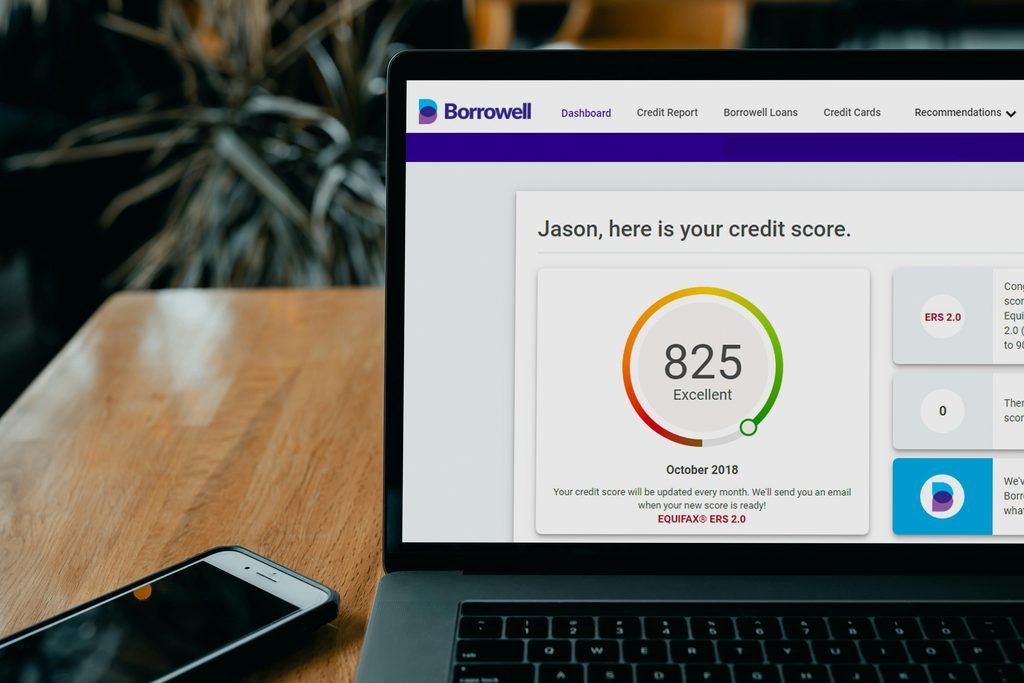
This is where the real number gets personal, since so many people carry a balance without ever checking what their score should actually be earning them.
| Credit Tier | Score Range | Typical APR (2026) |
|---|---|---|
| Excellent | 740+ | 17-21% |
| Good | 670-739 | 21-24% |
| Fair/Poor | Below 670 | 27-34%+ |
The national average sits around 21.5-23.8%, but that figure blends every tier together.
If your score is excellent and you’re still paying 25%+, you’re very likely overpaying relative to what your own credit profile should command.
The Real Dollar Cost on a $7,000 Balance
At the national average rate, a $7,000 balance costs roughly $125-140 a month in interest alone.
Dropping from a “fair” tier rate (27%) to an “excellent” tier rate (18%) on that same balance saves close to $50/month — over $600 a year, from credit improvement alone, with no change in spending.
A Detail Worth Knowing: Credit Unions Undercut Banks
Credit union credit cards average meaningfully lower APRs than bank cards at the same credit tier — sometimes 4-5 percentage points lower on basic cards, and an even wider gap on student cards.
If you’re comparing offers, a credit union is worth checking before defaulting to whichever bank you already use for checking.
Why the Gap Has Gotten Wider Recently
Auto and card rates generally track a few percentage points above the federal funds rate, which has stayed elevated through 2026 relative to pre-2022 levels.
On top of that baseline, delinquency rates have risen to levels not seen in over a decade, pushing lenders to widen the spread between their best and worst rate tiers even further.
In practice, a strong credit score is worth more in today’s rate environment than it was just a few years ago — and a weak one costs more too.
It’s Not Just Mortgages, Cars, and Cards
A stronger score can also influence personal loan pricing, insurance premiums in many states, whether a landlord requires a larger security deposit, and cell phone or utility deposit requirements.
The same underlying number quietly follows you into decisions that have nothing to do with borrowing money directly.
A Real Step-by-Step Plan to Move the Number

If You Have Time Before a Big Purchase (6+ Months)
- Pull your full credit report (free at AnnualCreditReport.com) and check for errors — disputing an inaccurate late payment can produce a fast, real improvement.
- Pay down any card above 30% utilization first — this is the single fastest lever, often visible within one billing cycle.
- Set every account to autopay for at least the minimum, removing the risk of a single missed payment undoing months of progress.
- Leave old accounts open, even unused ones — closing them shortens your credit history and can raise your utilization ratio.
- Avoid opening new credit accounts in the 3-6 months before you apply for a mortgage or auto loan specifically.
If You Need to Borrow Soon and Your Score Isn’t Where You Want It
- Compare rates across multiple lenders regardless of score — the spread between offers can be significant even within the same tier.
- For mortgages, ask specifically about FHA, VA, or USDA eligibility if your score is in the 600s.
- For a car loan, get pre-approved through a credit union before shopping — you’ll know your real rate before a dealer quotes you one.
- For existing credit card debt, call and ask for a lower rate directly, or contact a nonprofit credit counseling service, which can often negotiate rates down to 8-10% through a structured debt management plan.
Matching Action to Your Situation
- “I’m about to apply for a mortgage or refinance.” → Check your score now, and if you’re within a few points of the next tier, pay down a card balance before applying — the tier jump alone can be worth tens of thousands over the loan’s life.
- “I’m shopping for a car loan and my score isn’t great.” → Get pre-approved through a credit union first, and compare that rate against dealer financing before signing anything.
- “My score is in the 600s and I need to borrow soon.” → Look into government-backed loan programs, which weigh credit score less harshly than conventional loans.
- “I’m carrying a credit card balance at a rate that feels too high for my score.” → Call your issuer and ask directly for a lower rate, or compare a credit union card against your current one.
- “I have time before I need to borrow.” → Focus on utilization and payment history first — these two levers move the score more than anything else, given enough time.
Tools Worth Using
- AnnualCreditReport.com — the official source for your free credit reports from all three bureaus, and the starting point for catching errors
- A free credit score monitoring app through your bank or card issuer — safe to check as often as you like, since it’s a soft inquiry
- A credit union pre-approval for auto loans — often the fastest way to see your real rate before a dealer quotes one
- Nonprofit credit counseling — can negotiate existing credit card rates down to 8-10% through a structured debt management plan
Common Questions About This
How much can my credit score actually save me on a mortgage?
Comparing the highest and lowest credit tiers on the same loan, the gap can total roughly $60,000 or more in interest over the life of the loan.
What’s a good credit card interest rate for my score right now?
Excellent credit (740+) typically sees 17-21%; good credit (670-739) sees 21-24%; anything below that climbs toward 27% or higher.
Are all loan types equally strict about credit score?
No — conventional and jumbo mortgages weigh it heavily, while FHA, VA, and USDA loans tend to be more forgiving.
What’s the single fastest way to improve my score before a big purchase?
Paying down credit card balances to lower your utilization tends to produce the quickest visible improvement, often within a billing cycle or two.
Does checking my own credit score lower it?
No — checking your own score is a soft inquiry and has no effect. Only hard inquiries from lenders during an actual application can cause a small, temporary dip.
Before Your Next Big Purchase
This number has been quietly setting the price on nearly every major financial decision you’ll make.
Check it before you apply for anything significant, run it against the actual rate tables above, and if there’s room to improve it even slightly before that application goes in, the math shows exactly why that effort is worth making.